
A Supplement Facts panel is the nutrition box required on every dietary supplement label in the US. To comply, it must follow 21 CFR 101.36: the title "Supplement Facts", a serving size and servings per container, dietary ingredients with Daily Values listed first in a set order with amounts and % Daily Value, then other dietary ingredients with amounts and a "Daily Value not established" symbol, and the plant part for botanicals. Other ingredients such as the capsule shell go in a separate list below the panel.
What the panel is for
The panel tells customers exactly what is in one serving and how it compares with Daily Values. The format is standardized so shoppers can compare products. The rules are in 21 CFR 101.36, within the broader food labeling rules in 21 CFR Part 101, and the FDA explains them in plain language in its Dietary Supplement Labeling Guide.
The parts of a Supplement Facts panel
| Element | What to show | Common mistakes |
|---|---|---|
| Title | "Supplement Facts" | Using "Nutrition Facts" for a supplement |
| Serving size | Units per serving, such as "2 Capsules" | Serving that does not match the directions |
| Servings per container | Number of servings in the bottle | Wrong math with the count |
| Column headings | "Amount Per Serving" and "% Daily Value" | Missing headings |
| Nutrients with Daily Values | Name, amount, unit and % DV, in the required order | Wrong order or wrong units |
| Other dietary ingredients | Name and amount, marked with a symbol for "Daily Value not established" | Missing amounts outside a blend |
| Botanicals | Common or usual name and the plant part | Leaving out the part, such as root or leaf |
| Proprietary blend | Blend name, total weight, ingredients in descending order by weight | Listing ingredients without the total |
| Footnotes | Explanations of symbols and, when relevant, the 2,000 calorie statement | Symbols with no explanation |
Line by line
Serving size and servings per container
The serving size is the amount the label recommends per eating occasion, expressed in units such as capsules or tablets. It must match the directions. If the directions say "take 2 capsules daily", the serving is 2 capsules and a 60-count bottle has 30 servings.
Nutrients with Daily Values
Vitamins and minerals that have Reference Daily Intakes, and some other nutrients, are listed first, in the order set by the regulation. In practice, that order starts with calories and macronutrients if present in significant amounts, followed by vitamins (A, C, D, E, K, then the B vitamins) and minerals (calcium, iron and so on). Show the amount per serving in the required unit, such as mcg or mg, and the percent of Daily Value. Nutrients present at zero are not listed.
You may show the source in parentheses, such as "Magnesium (as magnesium glycinate)", either in the panel or in the ingredient list.
Other dietary ingredients
Ingredients without Daily Values, such as botanicals, amino acids or other compounds, are listed below the nutrients, each with its amount per serving and a symbol, usually a dagger, that links to the footnote "Daily Value not established".
Botanicals
For botanical ingredients, include the part of the plant used, for example "Ashwagandha (root) extract". If the extract is standardized, the amount of the marker compound can be shown too.
Proprietary blends
A proprietary blend lists the blend's name and total weight, then the ingredients in descending order by weight, without individual amounts for the ingredients that have no Daily Value. Blends are legal, but many shoppers prefer fully disclosed formulas, so think about whether a blend helps your brand.
A simple supplement label template
Here is a simplified example of how the information is organized. Your designer will apply the required formatting, lines and type sizes.
| Supplement Facts | ||
|---|---|---|
| Serving Size 2 Capsules | ||
| Servings Per Container 30 | ||
| Amount Per Serving | % Daily Value | |
| Vitamin D (as cholecalciferol) | 25 mcg | 125% |
| Magnesium (as magnesium glycinate) | 200 mg | 48% |
| Zinc (as zinc citrate) | 10 mg | 91% |
| Ashwagandha (root) extract | 300 mg | † |
| † Daily Value not established. |
Other ingredients: hypromellose (vegetable capsule), rice flour.
Use this supplement label template as a starting point only. Check every value against your final formula and the current Daily Values before printing.
Formatting rules that trip people up
- Title in larger type than other text in the panel
- Minimum type sizes met for the package size
- Hairlines and bars separating sections as required
- Units exactly as required for each nutrient
- % DV calculated against current Daily Values and rounded correctly
- All symbols explained in footnotes
- Panel placed on the information panel or principal display panel
- Other ingredients listed outside the panel, in descending order by weight
Where the numbers come from
The amounts on the panel must reflect what is actually in the product. Your manufacturer's formula and specification are the source. Many products include a small overage of nutrients that degrade over time, so the product meets the label throughout its shelf life; the label shows the declared amount, not the overage. Finished product testing against the specification, required under 21 CFR Part 111, confirms the declared amounts. See supplement testing.
Common panel errors and how to fix them
| Error | Fix |
|---|---|
| Serving size says 1 capsule, directions say 2 | Make the serving size match the directions |
| Vitamin listed in IU or in the wrong unit | Use the current required unit, such as mcg for vitamin D |
| Nutrients out of order | Follow the order in 21 CFR 101.36 |
| Botanical with no plant part | Add the part, such as root, leaf or seed |
| Dagger symbol with no footnote | Add "Daily Value not established" |
| % DV based on old Daily Values | Recalculate with the current values |
Supplement Facts vs Nutrition Facts
Dietary supplements use Supplement Facts; conventional foods use Nutrition Facts. The supplement panel allows ingredients without Daily Values, requires plant parts for botanicals and lets you show sources in the panel. If your product is a capsule or tablet sold as a dietary supplement, Supplement Facts is the right panel.
Beyond the panel: the rest of the label
The panel is one of five required label elements: statement of identity, net quantity, Supplement Facts, other ingredients, and name and place of business. Allergen declarations and, where relevant, warnings and the structure/function disclaimer complete it. Our guide to dietary supplement label requirements covers each of them, and structure/function claims covers what you may say.
Working with your manufacturer on the panel
The best time to draft the panel is during formulation, when doses are still flexible. A good manufacturer will:
- Prepare a Supplement Facts draft from the formula
- Flag units, order and rounding issues
- Check that the serving size matches the capsule or tablet count
- List the other ingredients, including the capsule shell or tablet excipients
- Review your final artwork before printing
The brand owner still approves the label and is responsible for it. Read more in custom supplement formulation.
Supplement Facts panels at Natural Florida
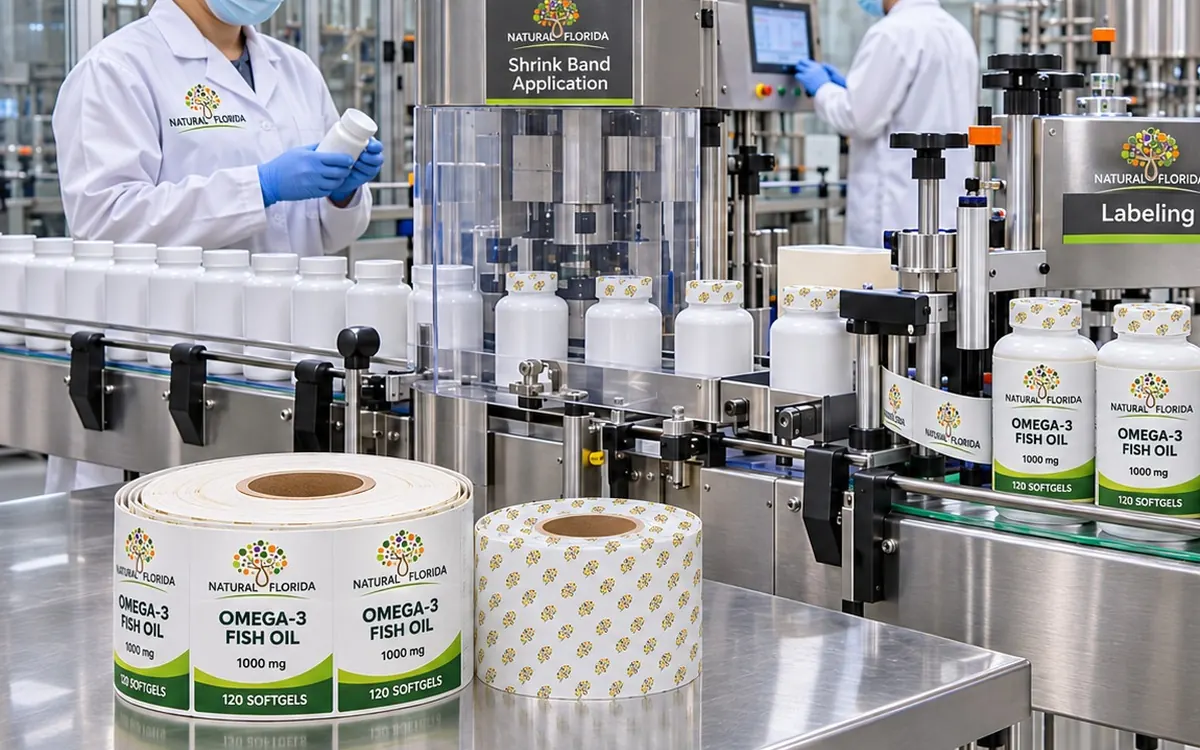
At Natural Florida, a Supplement Facts panel draft is part of formulation. Our team prepares it from your formula, checks the serving size against the capsule or tablet count, lists the other ingredients and reviews your final label before printing, for capsules and tablets made under cGMP practices under 21 CFR Part 111. See our custom formulation service, learn how we prepare your Supplement Facts draft, or send your formula or label through the quote form. We reply within one business day.
Frequently asked questions
What is required on a Supplement Facts panel?
The title, serving size, servings per container, dietary ingredients with Daily Values in the required order with amounts and % DV, other dietary ingredients with amounts, plant parts for botanicals, and footnotes explaining symbols.
Do I list ingredients like the capsule shell in the panel?
No. The capsule shell, fillers and flow agents go in the "other ingredients" list below the panel.
Can I use a proprietary blend?
Yes. List the blend's name and total weight, and the ingredients in descending order by weight. Individual amounts are not required for ingredients without Daily Values in the blend.
Where can I find the official rules?
In 21 CFR 101.36, available on eCFR, and in the FDA Dietary Supplement Labeling Guide.