
FDA supplement label requirements come down to five required elements: a statement of identity that names the product as a dietary supplement, the net quantity of contents, a Supplement Facts panel, an ingredient list for other ingredients, and the name and place of business of the manufacturer, packer or distributor. On top of these, labels must declare major food allergens, carry a domestic address or phone number for adverse event reports, include required warnings, and add the FDA disclaimer next to any structure/function claim.
The legal basis
Dietary supplement labeling is governed by the Federal Food, Drug, and Cosmetic Act as amended by the Dietary Supplement Health and Education Act, and by FDA regulations in 21 CFR Part 101, including 21 CFR 101.36 for the Supplement Facts panel and 21 CFR 101.93 for structure/function statements. The FDA's Dietary Supplement Labeling Guide is the most practical reference for brands.
Where things go on the bottle
Two panels matter:
- Principal display panel (PDP): the part of the label most likely to be seen at the point of sale, usually the front. The statement of identity and net quantity go here.
- Information panel: generally the panel immediately to the right of the PDP. The Supplement Facts panel, other ingredients, and name and place of business usually go here, together.
On small round bottles, the PDP is usually about 40% of the label area facing the shopper.
The five required elements
| Element | What it says | Where |
|---|---|---|
| Statement of identity | Product name including "dietary supplement" or a descriptive term, such as "Magnesium Supplement" | PDP |
| Net quantity of contents | Count, such as "60 Capsules", or weight | PDP, lower 30% |
| Supplement Facts panel | Serving size, dietary ingredients, amounts, % DV | Information panel or PDP |
| Other ingredients | Non-dietary ingredients such as capsule shell, fillers, flow agents, in descending order by weight | Below the panel |
| Name and place of business | Manufacturer, packer or distributor, with a qualifier such as "Distributed by" | Information panel |
Statement of identity
The name must include the words "dietary supplement" or replace "dietary" with a description of the ingredients, such as "vitamin C supplement" or "herbal supplement". It should appear on the front in a prominent size.
Net quantity
State the count of capsules or tablets, or the net weight, in the bottom area of the front panel. Use the required type sizes for your label size.
Supplement Facts panel
The panel is detailed enough to need its own guide. See Supplement Facts panel: how to design one that complies.
Other ingredients
List every ingredient that is not in the Supplement Facts panel, including the capsule shell, colorants, fillers, binders, coatings and flow agents, in descending order by weight, preceded by "Other ingredients".
Name and place of business
Give the name and address of the manufacturer, packer or distributor. If the company named is not the manufacturer, add a qualifier such as "Distributed by" or "Manufactured for". The street address can be omitted if the company is listed in a current city directory or phone directory, but the city, state and ZIP code are required.
Other required statements
Major food allergens
If an ingredient contains a major food allergen, the label must declare it, either in the ingredient list or in a "Contains" statement. The major food allergens in the US are milk, eggs, fish, crustacean shellfish, tree nuts, peanuts, wheat, soybeans and sesame. The FDA's food allergies page has the details. Remember that excipients and capsule ingredients count.
Domestic address or phone number for adverse events
The label must include a domestic address or US phone number through which the responsible company can receive reports of serious adverse events. Most brands use their "Distributed by" address and add a phone number.
Required warnings
Some products need specific warnings. The best-known is the accidental overdose warning on iron-containing supplements in solid form. Other warnings may be required by state law or recommended for specific ingredients. Ask your manufacturer which apply to your formula.
Structure/function disclaimer
If the label makes a structure/function claim, such as "supports healthy sleep", it must carry this disclaimer, linked to the claim by a symbol: "These statements have not been evaluated by the Food and Drug Administration. This product is not intended to diagnose, treat, cure, or prevent any disease." The company must also notify the FDA within 30 days of first marketing the claim. Read structure/function claims and the FDA's structure/function claims page.
Recommended (not strictly required) elements
- Directions for use. Practical and expected by customers; they also support the serving size.
- Lot number and best-by date. Essential for traceability under cGMP; manufacturers apply them during packaging.
- Storage instructions. For example, "Store in a cool, dry place."
- Tamper-evident statement. For example, "Do not use if seal under cap is broken or missing."
- Barcode. Needed by retailers and marketplaces.
- "Made in USA" claims. Only if they meet the FTC standard; see complying with the Made in USA standard.
Common labeling mistakes
- Calling the product a "supplement" without "dietary" or a descriptor
- Serving size that does not match the directions
- Missing plant part for botanicals
- Capsule shell left out of other ingredients
- Allergen hidden in an excipient and not declared
- Disease claims on the label or in the product name
- Structure/function claim without the disclaimer
- Address with no US phone or address for adverse event reports
Supplement label checklist
- Statement of identity with "dietary supplement" or descriptor on the front
- Net quantity in the lower part of the front panel
- Supplement Facts panel following 21 CFR 101.36
- Other ingredients, including capsule shell and excipients
- Major food allergens declared
- Name and place of business with "Distributed by" or similar
- Domestic address or phone number for adverse event reports
- Required warnings, such as the iron warning
- FDA disclaimer linked to any structure/function claim
- No disease claims anywhere on the label
- Space for lot number and best-by date
- Directions and storage instructions
- Marketing claims supported by evidence, as described in the FTC Health Products Compliance Guidance
Label design and packaging
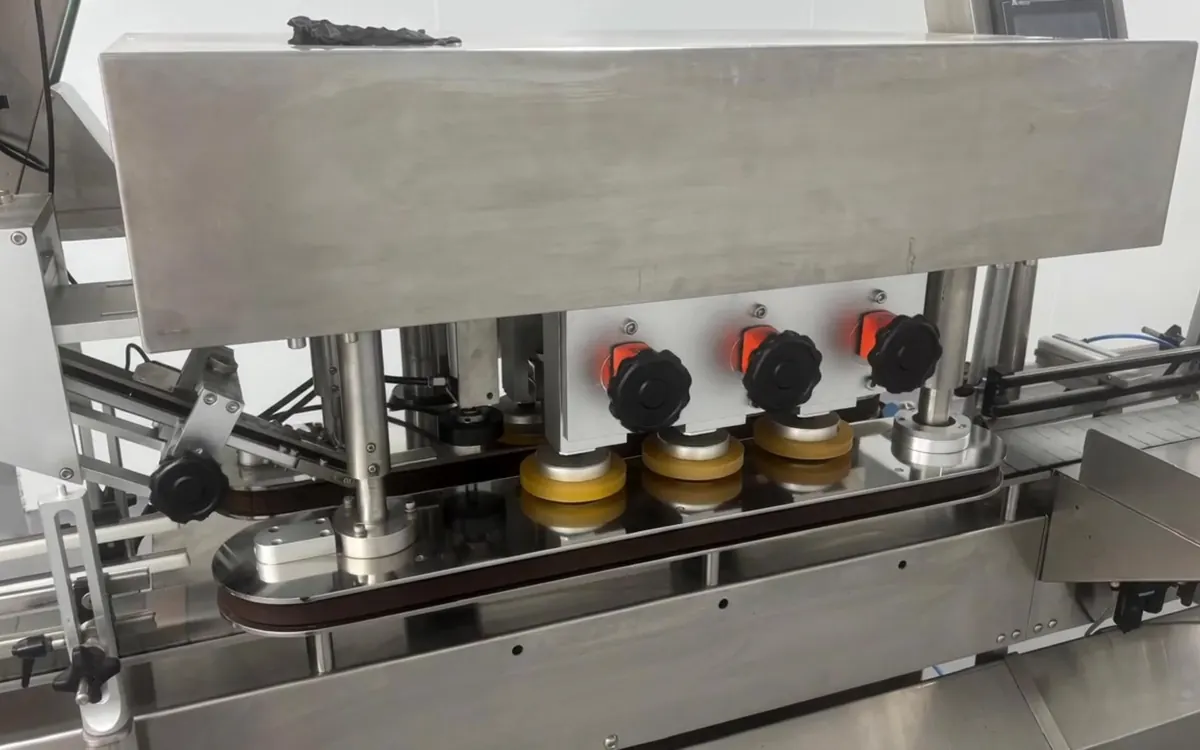
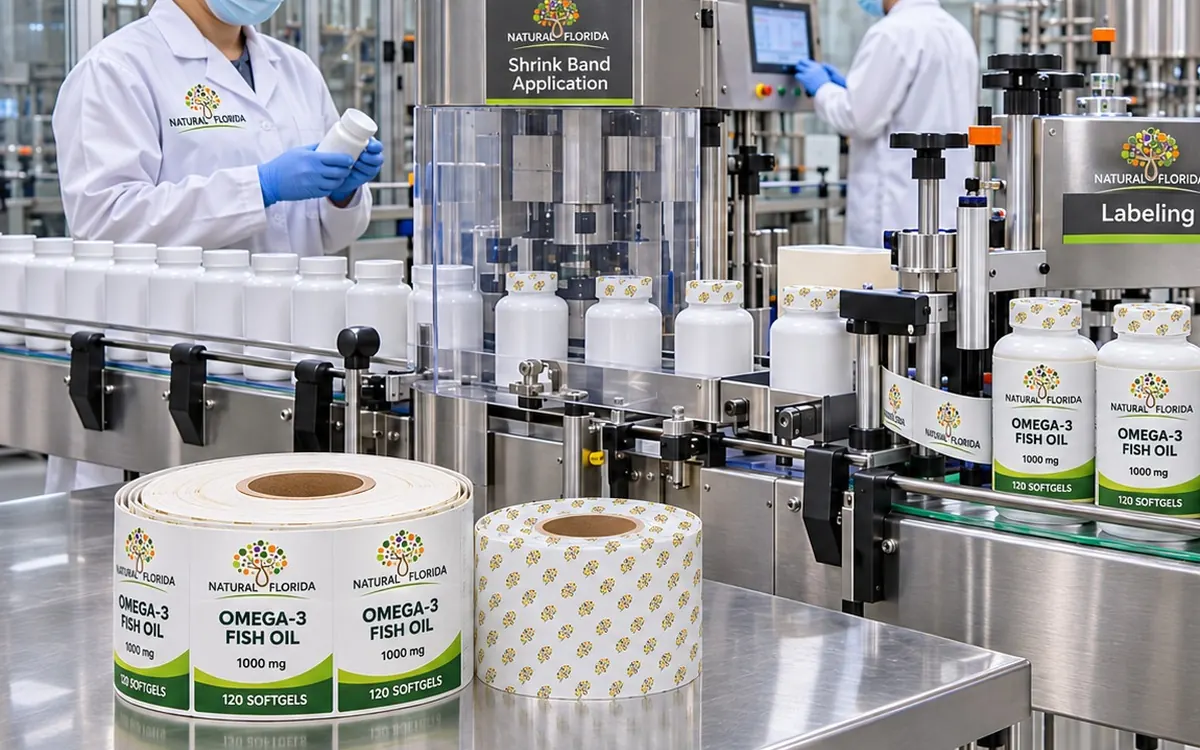
Label size depends on your bottle. Plan the design around the bottle and cap you will actually use, and leave space for lot and date coding. If you add a shrink sleeve or box, the box must also carry the required information when it is the outer package seen at sale. See the supplement packaging guide.
Who is responsible for the label?
The company named on the label is responsible for it. Your manufacturer can review artwork and flag problems, and its records must show the right label went on the right product under the cGMP rule, 21 CFR Part 111. Final approval of claims and design rests with you.
Label help at Natural Florida
Natural Florida helps private label and custom brands get labels right. We prepare the Supplement Facts panel, list the other ingredients for your capsules or tablets, review your artwork for required elements and claims that are not allowed, and apply your labels with lot numbers and best-by dates during packaging, under cGMP practices under 21 CFR Part 111. See our private label supplements service, which includes Supplement Facts and label review, or send your artwork through the quote form. We reply within one business day.
Frequently asked questions
What must be on a dietary supplement label?
A statement of identity, net quantity, Supplement Facts panel, other ingredients, and the name and place of business of the manufacturer, packer or distributor, plus allergen declarations, a domestic contact for adverse events and any required warnings.
Do supplement labels need FDA approval?
No. The FDA does not approve supplement labels before sale, but labels must follow FDA rules, and structure/function claims must be notified to the FDA within 30 days of marketing.
Do I need the FDA disclaimer on every supplement?
Only if the label makes a structure/function claim. The disclaimer must appear with the claim, linked by a symbol.
Is a lot number required on supplement labels?
Manufacturers must be able to trace every batch under 21 CFR Part 111, so a lot number on the package is standard practice and expected by retailers and marketplaces.
Sources and further reading
- ecfr.gov: 21 CFR Part 101
- ecfr.gov: 21 CFR 101.36
- ecfr.gov: 21 CFR 101.93
- fda.gov: Dietary Supplement Labeling Guide
- fda.gov: food allergies page
- fda.gov: structure/function claims page
- ftc.gov: complying with the Made in USA standard
- ftc.gov: FTC Health Products Compliance Guidance
- ecfr.gov: 21 CFR Part 111