
To sell Amazon private label supplements, Amazon's dietary supplement policy expects products to be made under the FDA cGMP rule, labeled in line with FDA rules and verified through an Amazon-approved third-party testing, inspection and certification (TIC) organization, with supporting documents. Your manufacturer must be ready to provide certificates of analysis, evidence of cGMP compliance and correct label information, and to pack and code your product so it can be received by FBA.
Amazon updates its rules often, so always check the current dietary supplement policy in Seller Central before you order. This guide covers what usually matters and what to ask your manufacturer.
How Amazon treats dietary supplements
Dietary supplements are a restricted category on Amazon. In broad terms, sellers are asked to show that:
- The product is a dietary supplement under US law and is labeled as one.
- It is manufactured in compliance with the FDA cGMP rule for dietary supplements, 21 CFR Part 111.
- The label follows FDA requirements, including the Supplement Facts panel in 21 CFR 101.36.
- The product has been tested and verified by an approved TIC organization, which may review labels, documents and samples.
- Listings and images do not make disease claims or other prohibited claims.
The details, approved organizations and accepted documents change over time, which is why your manufacturer should be comfortable supporting the process rather than leaving it all to you.
Documents your manufacturer should provide
| Document | What it shows | Who usually provides it |
|---|---|---|
| Certificate of analysis (COA) per lot | The batch met its specification: identity, strength, contaminants | Manufacturer or its lab |
| Evidence of cGMP compliance | The facility follows 21 CFR Part 111, for example audit reports or inspection history | Manufacturer |
| Product specification | What the product must contain and the limits it must meet | Manufacturer, agreed with you |
| Final label proof | Exact label used on the lot, with Supplement Facts | You, reviewed with the manufacturer |
| Ingredient documents | Supplier COAs, allergen statements, sometimes origin | Manufacturer |
| Letter of guarantee or similar | Manufacturer's statement about how the product is made | Manufacturer, on request |
Learn how to check a COA in our guide on how to read a certificate of analysis.
Label details that cause rejections
Most problems on Amazon start with the label. Check these before printing:
- The words "dietary supplement" in the statement of identity
- A complete Supplement Facts panel in the right format
- "Other ingredients" listed, with major food allergens declared
- Net quantity on the front panel
- Name and place of business of the manufacturer or distributor
- A domestic address or phone number for adverse event reports
- The FDA disclaimer next to any structure/function claim
- No disease claims on the label, images or listing
- Lot number and expiration or best-by date on the bottle
- Label images that match the product actually shipped
The FDA Dietary Supplement Labeling Guide is the best free reference. Our guide to supplement label requirements walks through each element.
Testing for marketplace review
Under Part 111, each batch must meet its specification before release. For Amazon, a TIC organization may also test samples or review existing test results against the label. Ask your manufacturer:
- Which tests are done on every lot, and which are done by an outside lab
- Whether results can be shared with the TIC organization you use
- How retained samples are kept, in case extra testing is needed
- How quickly a COA is ready after production
Packaging and FBA prep
Amazon fulfillment adds practical requirements. Your manufacturer should be able to deliver:
- Barcodes. A scannable UPC on each bottle registered to your brand; you may also need Amazon FNSKU labels depending on your setup.
- Expiration dates. Supplements should show a clear expiration or best-by date in a format Amazon accepts. Fulfillment centers can refuse product with too little shelf life left, so plan inventory accordingly.
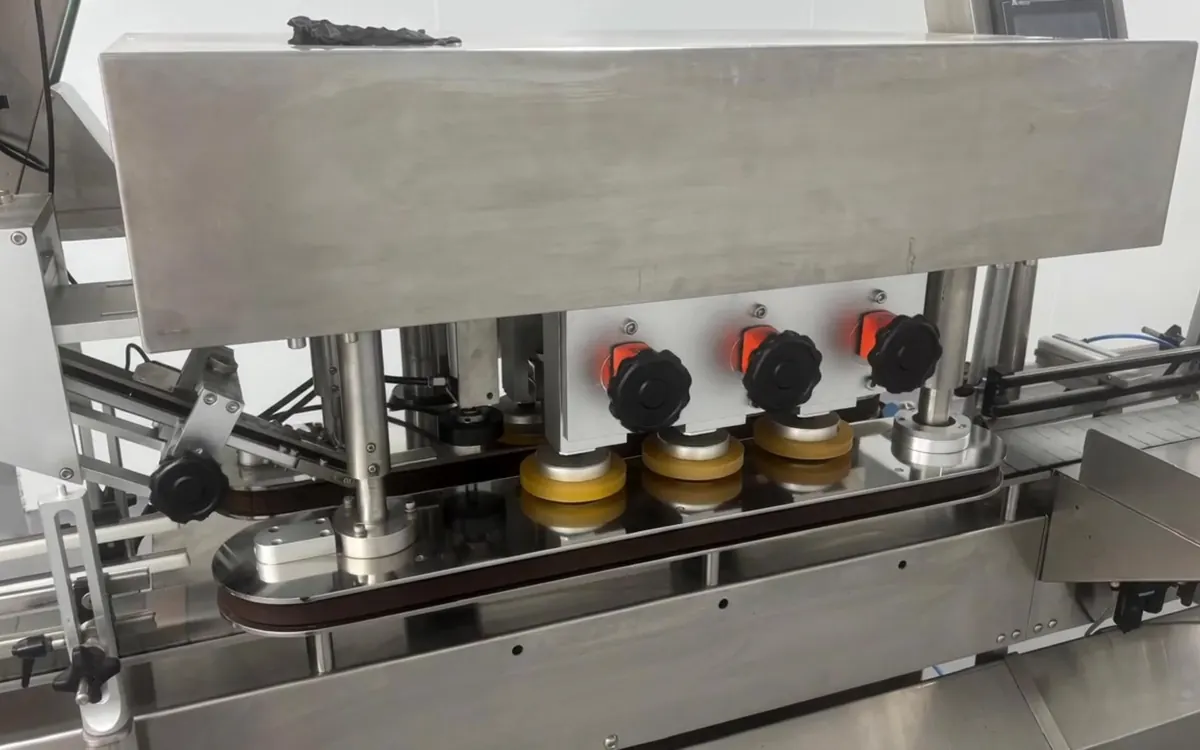
- Tamper evidence. An induction seal and often a shrink band help products arrive intact and look trustworthy.
- Carton labels and case packs. Consistent case quantities, carton labels and weights within Amazon's limits.
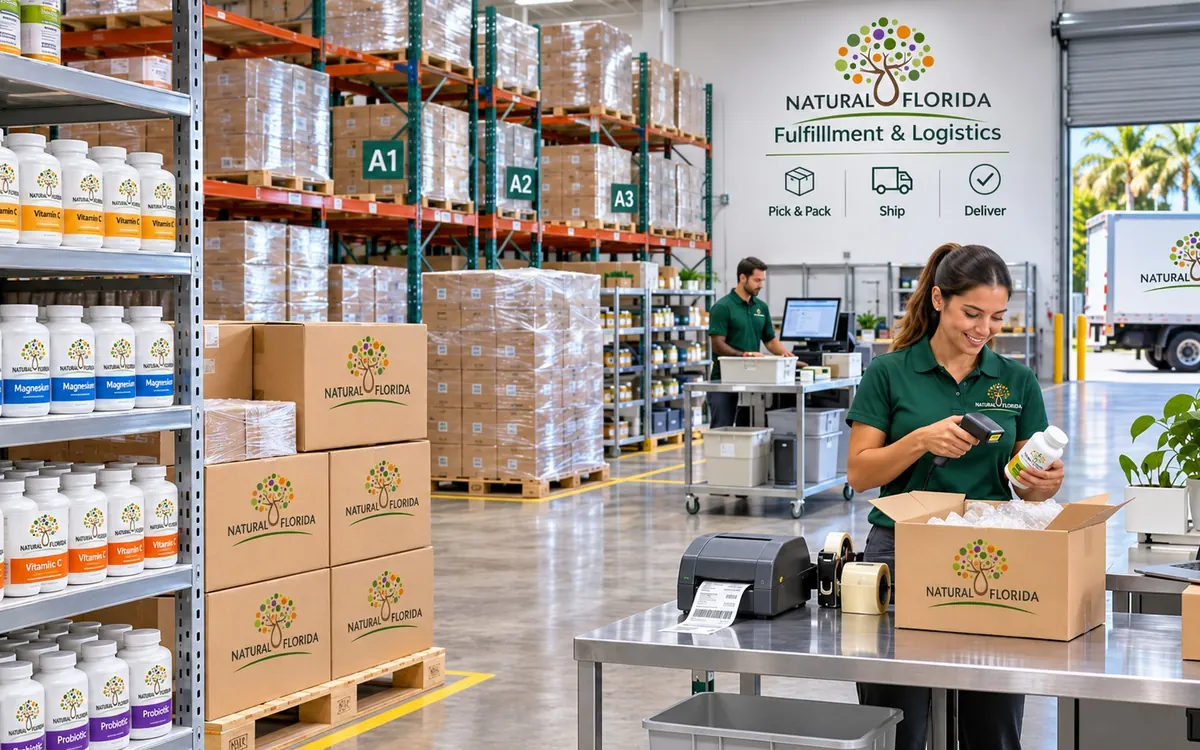
- Shipping to FBA. Product shipped directly to a fulfillment center or to a prep center or 3PL.
See our supplement packaging guide for bottle, cap and seal choices.
Claims in your listing
The same rules apply to your listing as to your label. The FTC requires competent and reliable scientific evidence for health-related claims, as described in its Health Products Compliance Guidance, and the FDA allows structure/function claims only with the required disclaimer and notification under 21 CFR 101.93. Amazon will also remove listings that suggest a supplement treats or prevents disease. Read our guide on structure/function claims before you write bullet points.
Choosing a manufacturer for Amazon
For Amazon, look for a manufacturer that:
- Follows 21 CFR Part 111 and can show evidence of it
- Provides a COA for each lot without delay
- Understands label requirements and reviews your artwork
- Offers low minimums, so you can launch and reorder without overstocking
- Ships to FBA or your prep center, with consistent cartons
- Answers fast when Amazon asks for documents
Running out of stock hurts rankings, so a predictable reorder schedule matters as much as the first run. A manufacturer with low minimum first runs lets you test a product before committing to volume.
Reviews, returns and product consistency
On Amazon, your reviews follow the product, not the batch. If one lot looks or smells different from the last, customers notice and say so. Consistency comes from three things your manufacturer controls:
- A fixed specification. The same ingredient forms, doses, capsule or tablet type and fill weight every time.
- A master manufacturing record. Every batch follows the same written instructions, as 21 CFR Part 111 requires.
- Change control. If an ingredient supplier or a capsule color has to change, you should hear about it before production, not from a review.
Ask how the manufacturer handles changes and whether you approve them. Also keep a few bottles from each lot yourself. If a customer complains, you can compare the lot number with your retained bottle and the COA, and give Amazon a clear, documented answer.
Planning inventory for FBA
Amazon limits how much stock you can send and charges for long-term storage, while running out of stock hurts your ranking. A simple rule many sellers use is to reorder when the stock on hand plus in transit covers only the manufacturing lead time plus a safety margin. Share your sales forecast with your manufacturer so the next batch is planned before you need it.
Private label for Amazon at Natural Florida
Natural Florida makes private label supplements for Amazon sellers and other online brands: capsules and tablets produced under cGMP practices under 21 CFR Part 111, batch testing before release, certificates of analysis on request, bottles with induction seals and desiccants, labeling with your artwork, and shipping to you, your 3PL or Amazon FBA. We also help prepare the Supplement Facts panel and flag claims that are not allowed. Compare our private label supplement options or send your product idea through the quote form.
Frequently asked questions
Does Amazon require third-party testing for supplements?
Amazon's dietary supplement policy has required verification through approved third-party testing, inspection and certification (TIC) organizations. Requirements change, so check the current policy in Seller Central before you list.
What documents do I need to sell supplements on Amazon?
Typically a certificate of analysis for the lot, evidence that the product is made under 21 CFR Part 111, clear label images and product details. Your TIC organization and Amazon may ask for more.
Can my manufacturer ship directly to Amazon FBA?
Many can. Agree on carton labels, case packs and booking details in advance so the shipment is received without problems.
Can I use the word "cure" or "treat" in my supplement listing?
No. Dietary supplements cannot claim to diagnose, treat, cure or prevent disease. Use truthful, supported structure/function statements with the required FDA disclaimer.