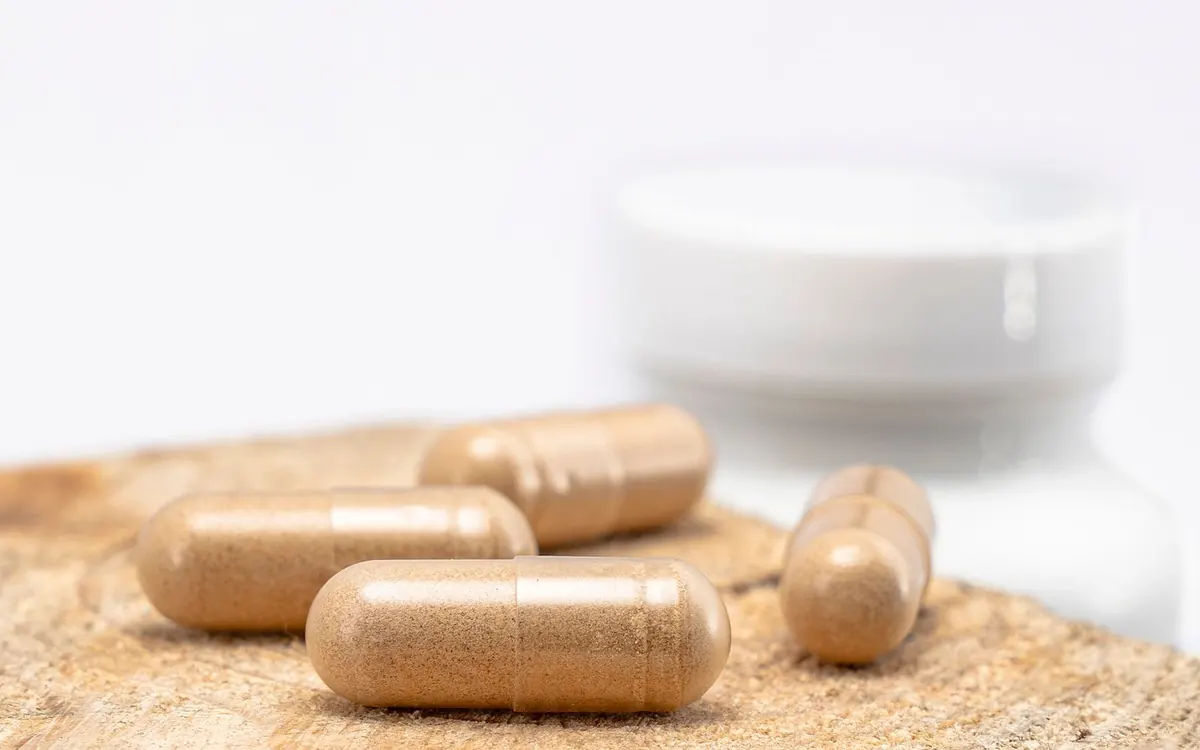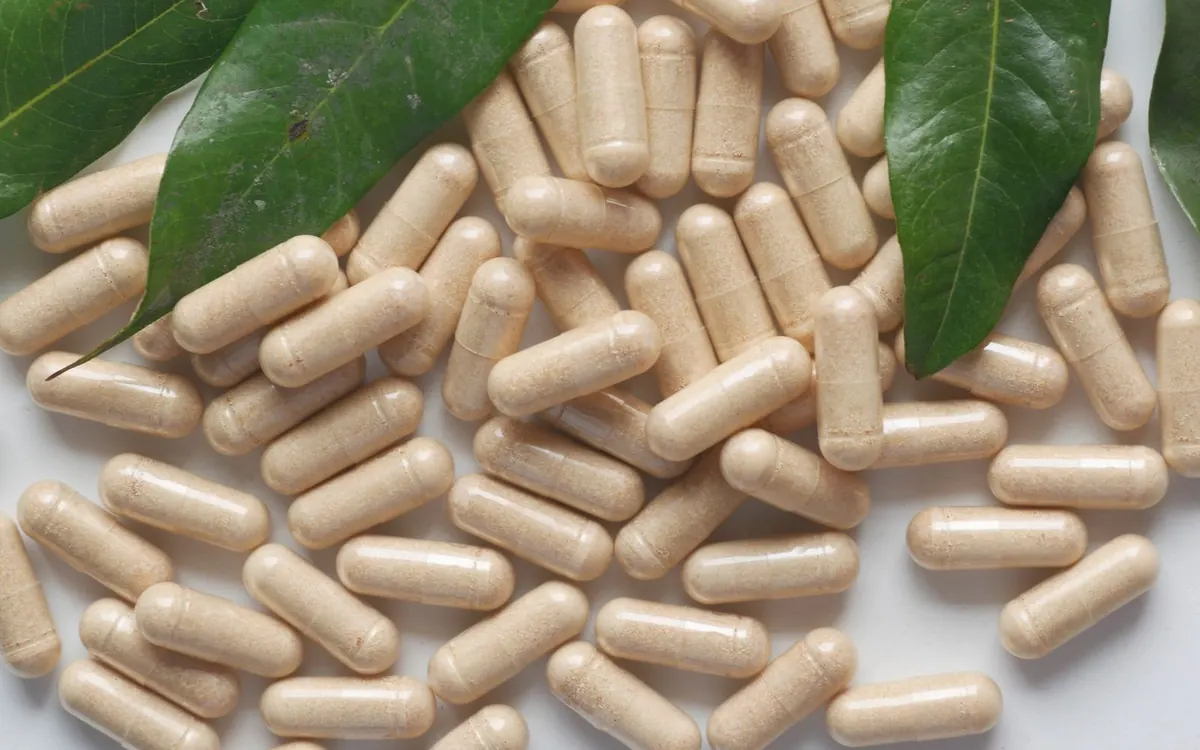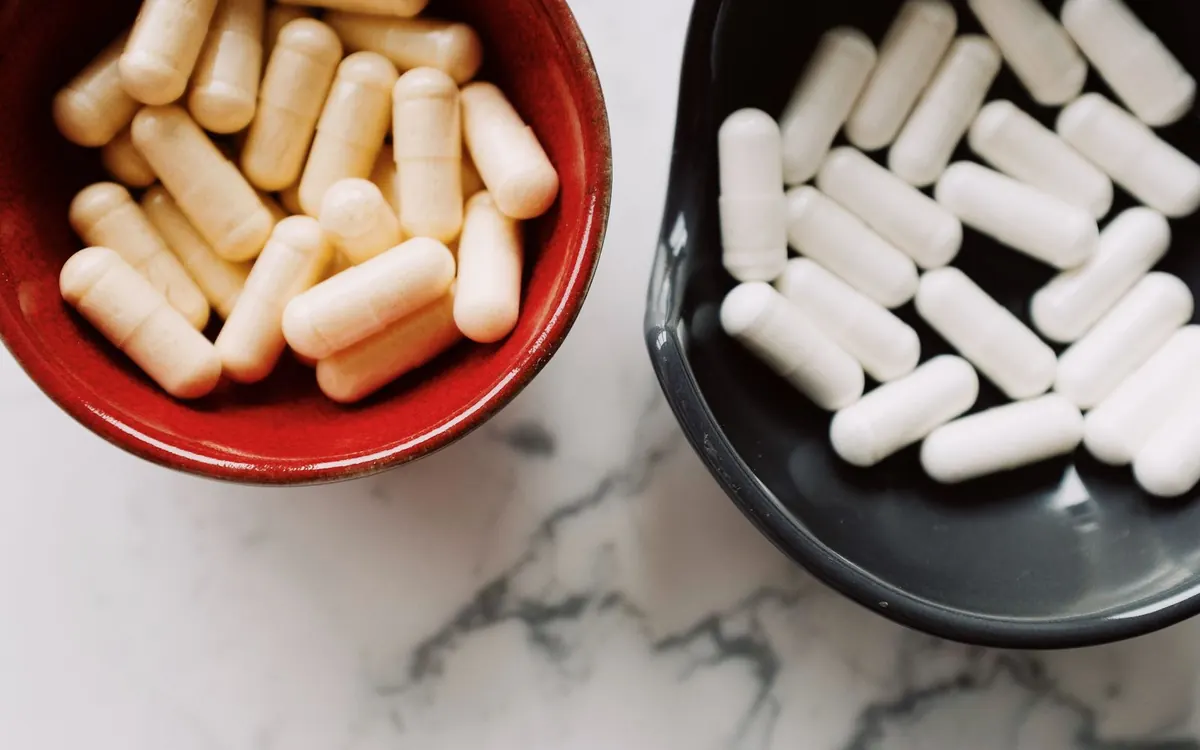

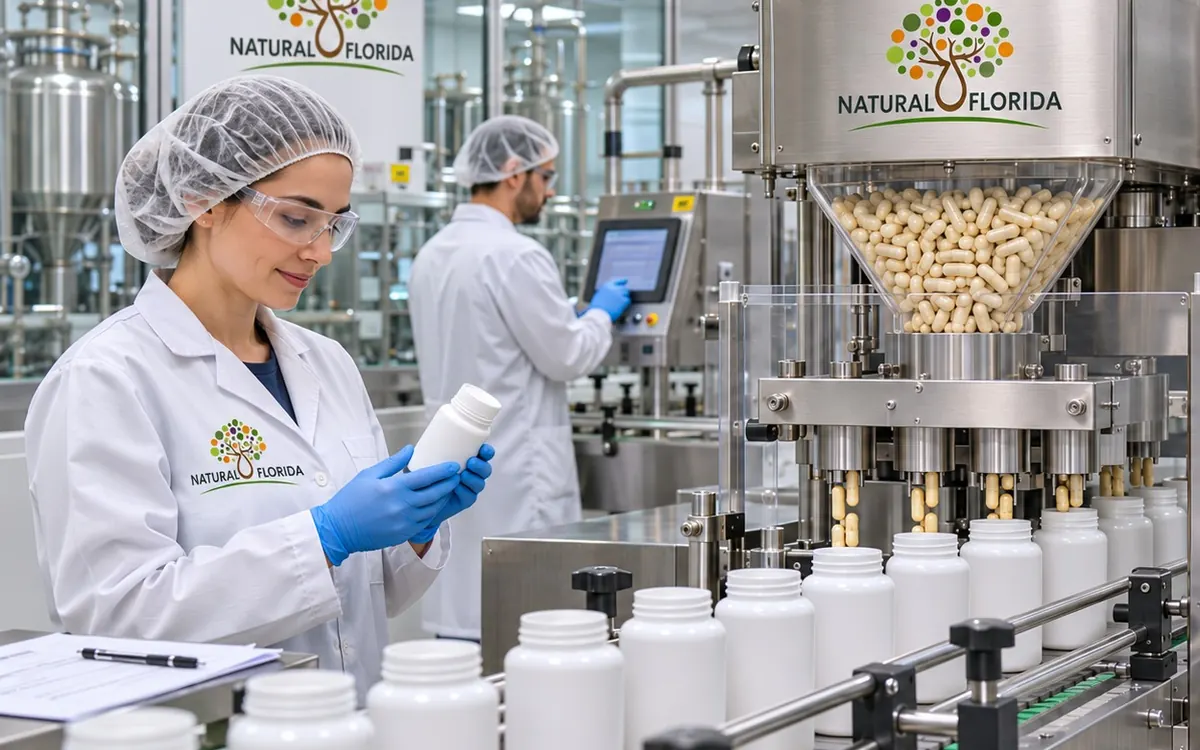
Supplement capsules are made by filling empty two-piece shells with a powder blend. A capsule manufacturer weighs and blends the ingredients, feeds the blend into an encapsulation machine that separates each shell, fills the body with a set amount of powder and closes it with the cap, then checks fill weights throughout the run. The capsules are polished, inspected, bottled and tested before release. The empty shells themselves, gelatin or vegetable (HPMC), are produced separately by specialist shell makers.
Capsule shells: where they come from
Most supplement brands use two-piece hard capsules. The shells are made by dedicated shell producers, usually by dipping stainless steel pins into a gelatin or HPMC solution, drying the film, then trimming and joining the body and cap. Shells arrive at the supplement factory empty, in cartons, by size and color.
A capsule manufacturer for supplements, in the sense most brands mean, is the company that fills those shells with your formula. Capsule manufacturing companies choose shell suppliers, store the shells in controlled conditions and check them on arrival against their specification.
Shell choice is covered in detail in vegetarian (HPMC) vs gelatin capsules, and size choice in the capsule size chart.
Step by step: from powder to capsule
| Step | What happens | Key checks |
|---|---|---|
| 1. Receiving | Ingredients and shells arrive and are quarantined | Identity testing of dietary ingredients; checks against specs |
| 2. Weighing | Each ingredient is weighed for the batch | Weights verified against the batch record |
| 3. Blending | Ingredients are mixed to an even blend | Blend time, order of addition, uniformity |
| 4. Encapsulation | The machine fills and closes shells | Fill weight at regular intervals, closed length, defects |
| 5. Polishing and sorting | Dust is removed; damaged or light capsules rejected | Visual inspection, weight sorting |
| 6. Bottling | Capsules counted into bottles; desiccant, cap and seal added | Count accuracy, seal integrity |
| 7. Labeling | Labels applied; lot and best-by date added | Correct label version, legible coding |
| 8. Testing and release | Finished product tested; records reviewed | Results meet the specification |
Inside the process
Weighing and blending
Every batch follows a master manufacturing record, the written recipe required by the FDA cGMP rule, 21 CFR Part 111. Operators weigh each ingredient against the batch record, and weights are verified. Ingredients are then blended so that every capsule gets the same proportion of each one. Small amounts of flow agents may be added if a powder is sticky or light, so it moves evenly through the machine.
Encapsulation
On an encapsulation machine, empty capsules drop into holders where vacuum separates the body from the cap. The body is filled with powder, either by tamping it into a measured plug or by dosing it through a filling mechanism, then the cap is pressed back on until it locks. Machines range from semi-automatic units for small batches to fully automatic machines that fill large numbers of capsules per hour.
Fill weight checks
Fill weight decides how much of each ingredient a customer gets. Operators pull capsules at set intervals, weigh them and record the results in the batch record. If weights drift, the machine is adjusted. Capsules outside limits are removed.
Polishing and inspection
Filled capsules pass through a polisher that removes powder from the outside, which keeps bottles clean and capsules looking good. Sorting removes split, dented or under-filled capsules.
What affects how well a formula runs in capsules
A capsule supplements manufacturer will look at a few properties of your blend:
- Bulk density. Light, fluffy powders take up more space, so fewer milligrams fit in each capsule. Dense minerals fit more.
- Flow. Powders that clump or stick fill unevenly; flow agents or a different particle size help.
- Moisture sensitivity. Hygroscopic ingredients can soften gelatin or draw moisture; HPMC shells and good packaging help.
- Dose per serving. If the total does not fit in one or two capsules, you may need a bigger size, more capsules per serving or a tablet. See capsules vs tablets.
- Odor and taste. Strong-smelling botanicals may call for opaque capsules or careful packaging.
Quality controls a capsule manufacturer should have
- Identity testing of every dietary ingredient before use
- Written master manufacturing record and batch record for each run
- Verified weighing of each ingredient
- Fill weight checks at regular intervals, recorded
- Line clearance between products to prevent mix-ups
- Cleaning records for equipment
- Finished product testing against a specification before release
- A certificate of analysis available for each lot
These follow directly from Part 111. The FDA summarizes the rule on its cGMP page for dietary supplements, and our article on supplement testing explains the finished product tests.
Bottling and labeling capsules
After release from encapsulation, capsules are counted into bottles. A desiccant protects against moisture, the cap is applied and an induction seal is heat-sealed under the cap for tamper evidence. Labels go on with your artwork, Supplement Facts panel and the lot number and best-by date. Shrink sleeves or neck bands can be added. The FDA Dietary Supplement Labeling Guide covers what must appear on the label. For packaging options, see the supplement packaging guide.
Choosing a capsule manufacturer
When you compare capsule manufacturing companies, ask:
- Do you fill capsules in house, and which sizes and shell types do you run?
- Have you run blends similar to mine?
- How do you decide capsule size and fill weight for my dose?
- How often are fill weights checked, and what are the limits?
- What finished product tests run on every batch?
- What is the minimum run for my formula and packaging?
- Do you bottle and label in house?
A full interview list is in how to choose a supplement manufacturer.
Common capsule problems and their causes
| Problem | Likely cause | Usual fix |
|---|---|---|
| Fill weights vary | Poor powder flow, uneven blend | Flow agent, better blending, machine adjustment |
| Capsules split or dent | Brittle shells, machine settings | Shell storage conditions, adjust closing |
| Powder on the outside | Fine, dusty blend | Polishing, adjusted filling |
| Capsules soften or stick | Moisture in the fill or the room | HPMC shells, desiccant, humidity control |
| Color spots inside clear shells | Uneven powder color | Opaque shells or better blending |
Why capsules are so popular
Capsules are the most popular supplement format for good reasons: they are easy to swallow, they usually need no binders, they hide the taste of most powders and they suit herbs, botanical extracts and blends. Vegetable capsules make vegan products simple. Their main limit is capacity: very high doses may need several capsules per serving, which is when tablets become worth a look.
Capsule manufacturing at Natural Florida
Natural Florida is a capsule manufacturer in Hollywood, Florida, filling vegetable (HPMC) and gelatin capsules in sizes from 000 to 3, in a range of colors, under cGMP practices under 21 CFR Part 111. Every capsule run includes formula review and a capsule size recommendation, fill weight checks during production, finished product testing before release, bottling in your chosen count and labeling with your artwork, with a certificate of analysis on request. Your formula or one of ours, with low minimums for first runs. See our custom capsule manufacturing service or request a capsule quote; we reply within one business day. For format options and sizes, the capsule manufacturing page has the details.
Frequently asked questions
How are supplement capsules made?
Ingredients are weighed and blended, then an encapsulation machine fills empty two-piece shells with the blend and closes them. Fill weights are checked through the run, and capsules are polished, bottled, labeled and tested before release.
Does a supplement manufacturer make the capsule shells?
Usually not. Empty gelatin or HPMC shells are made by specialist shell producers. The supplement manufacturer fills them with your formula.
How much powder fits in a capsule?
It depends on the capsule size and the density of the blend. A size 00 capsule, for example, holds roughly 0.91 ml, which may be several hundred milligrams for a typical powder. See our capsule size chart.
Are capsules better than tablets?
Neither is always better. Capsules are easy to swallow and simple to formulate; tablets hold more per unit. The right choice depends on your formula and dose.