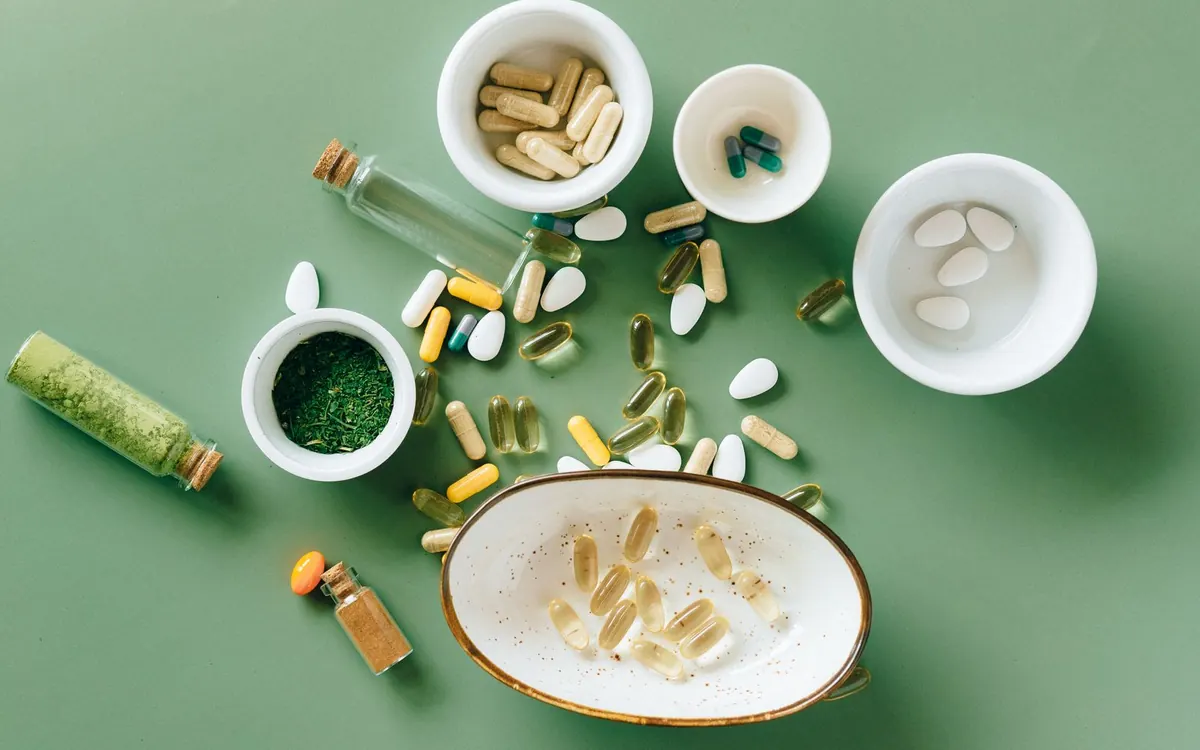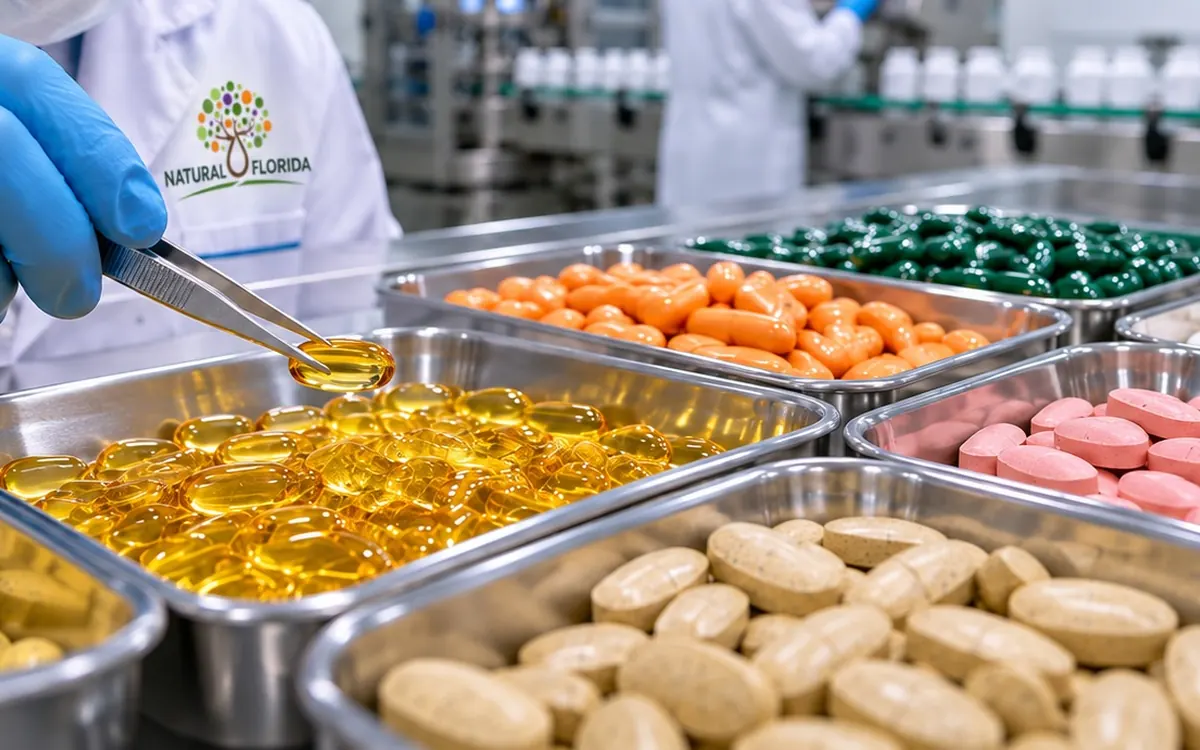


To start a supplement brand, you need five things in place: a clear customer and product idea, a formula (your own or a manufacturer's private label formula), a manufacturer that works under the FDA dietary supplement cGMP rule, a compliant label, and a sales channel. You do not need your own factory. Most brands begin with a small first run from a contract manufacturer, learn what sells, then reorder in larger batches.
This guide walks through the steps in the order they usually happen, with the questions to settle at each one.
Step 1: Pick a customer before you pick a product
The supplement market is crowded, so "a better multivitamin" is not a plan. Start with a specific person: a busy runner, a new parent, a gym owner's members, a clinic's patients, the people who already follow you online. Then ask what they buy today, where they buy it, and what annoys them about it.
Good starting signals for your own supplement brand:
- You already have an audience or a distribution channel (a store, a practice, a following).
- Search and marketplace data show steady demand, not a one-month spike.
- You can describe the product's difference in one sentence: a cleaner label, a better dose, a capsule instead of a chalky tablet, a vegan shell.
- The price customers expect leaves room for your costs, marketing and margin.
Step 2: Choose your route: private label, white label or custom
There are three common ways to brand your own supplements. The table below sums them up; our guide on private label vs white label vs custom supplements goes deeper.
| Route | What you get | Speed | Control |
|---|---|---|---|
| White label | A ready product, your label on it | Fastest | Lowest |
| Private label | A proven formula, adjustable details, your brand | Fast | Medium |
| Custom formulation | A formula built for your brand | Slower | Highest |
Most first-time founders start with private label or light customization, then add custom products once they know their customers. If you want something truly different, budget the extra time for development and sampling.
Step 3: Decide the format and the serving
Capsules and tablets cover most of the market. Capsules are easy to swallow and suit powders and botanical extracts; tablets hold more material per serving and cost less per unit at volume. Our comparison of capsules vs tablets explains the trade-offs.
Settle the serving early because it drives everything else: how many capsules per serving, which capsule size you need, how many servings fit in a bottle, and the cost per bottle.
Step 4: Build or select the formula
If you go private label, ask the manufacturer for its formula sheets and specifications and compare doses with what your customers expect. If you go custom, write a short brief:
- Target customer and the job the product does for them
- Ingredient list with the doses you have in mind, and why
- Format, serving size and bottle count
- Diet needs: vegan, gelatin-free, allergen-free
- Target retail price and target cost per bottle
- Competitor products you admire, and what you would change
A formulation team can then check that the ingredients work together in the chosen format and fit in the capsule or tablet you want. New ingredients that were not sold in the US before October 15, 1994 may need a New Dietary Ingredient notification to the FDA before you can sell them, so raise unusual ingredients early.
Step 5: Choose a manufacturer
Your manufacturer shapes your quality, your cash flow and your speed. Look for a company that follows the FDA dietary supplement cGMP rule, 21 CFR Part 111, tests ingredients and finished batches, gives you documentation, and answers your emails. For a full checklist, see how to choose a supplement manufacturer.
For a new brand, the minimum order quantity matters as much as the unit price. A large first order ties up cash and storage. Many founders start with a low MOQ supplement manufacturer so they can test the market with a small first run and scale once the product sells.
Step 6: Get samples and approve them
Never skip sampling. Samples let you check how the product looks, smells and tastes, how the capsules or tablets feel, and whether the bottle count is right. This is the cheapest moment to change anything. Once you approve, the manufacturer writes the specification and master manufacturing record that every future batch follows.
Step 7: Get the label right
The FDA does not approve supplements or their labels before they are sold, but it does set the rules, and the brand owner is responsible for following them. A dietary supplement label needs, among other things:
- A statement of identity that includes the words "dietary supplement" (or a term such as "vitamin C supplement")
- Net quantity of contents
- A Supplement Facts panel laid out as 21 CFR 101.36 requires
- An "Other ingredients" list and any major food allergens
- The name and place of business of the manufacturer, packer or distributor
- A domestic address or phone number for adverse event reports
If you make structure/function statements such as "supports healthy energy levels", you also need the FDA disclaimer and must notify the FDA within 30 days of first marketing the claim, as set out in 21 CFR 101.93. Our guides on supplement label requirements and the Supplement Facts panel cover the details, and the FDA Dietary Supplement Labeling Guide is the official reference.
Step 8: Set up the business side
Before launch, line up the unglamorous parts:
- Company formation, a business bank account and product liability insurance
- A trademark search for your brand name
- UPC barcodes registered to your company
- A plan for storage and shipping: your own space, a 3PL or Amazon FBA
- A simple system to record lot numbers sold, so you can trace any complaint or recall
Step 9: Plan the launch and the claims
Your marketing must follow the same rules as your label. The FTC expects advertisers to have competent and reliable scientific evidence for health-related claims, including claims made by influencers and in customer testimonials you promote. Read the FTC Health Products Compliance Guidance before you write your product pages and ads.
Pick one or two channels for launch and do them well. A focused Amazon listing or a single well-built store page beats a thin presence everywhere.
Step 10: Reorder smart and grow the line
Watch sell-through, reviews and return reasons for the first 60 to 90 days. Reorder before you run out; production slots and ingredients can take weeks to line up. When the first product works, add products that the same customer needs, made under the same quality standards. That is how a single SKU becomes a supplement brand.
A realistic launch checklist
- Customer and positioning written in one paragraph
- Route chosen: private label, white label or custom
- Format, serving and bottle count fixed
- Manufacturer selected, quote and specification in writing
- Samples approved
- Label reviewed against FDA rules, claims checked
- Barcodes, insurance and trademark search done
- Storage and shipping set up
- Launch channel and first 90-day plan ready
How Natural Florida helps new brands
Natural Florida manufactures capsules and tablets for supplement brands from our facility in Hollywood, Florida, following cGMP practices under 21 CFR Part 111. We work with first-time founders on private label and custom formulas, help prepare the Supplement Facts panel and label copy, make samples before production, and offer low minimum first runs for new supplement brands. Send us your idea through the quote form and you will get a reply within one business day.
Frequently asked questions
How much money do I need to start a supplement brand?
It depends on the formula, the format and how many bottles you order. Your largest early costs are usually the first production run, label design, barcodes, insurance and launch marketing. Our guide to supplement manufacturing cost lists typical ranges, but only a quote on your actual formula gives you a real number.
Do I need FDA approval to sell my own supplement brand?
No. The FDA does not approve dietary supplements before they are sold. You are responsible for making sure the product is safe, made under cGMP and labeled correctly, and for notifying the FDA of structure/function claims within 30 days of first marketing them.
Can I start a supplement brand without a formula?
Yes. You can choose a private label formula from a manufacturer or work with a formulation team that builds a formula from your idea, your target customer and your target cost.
How long does it take to launch a supplement brand?
It varies with the route. Private label products usually move faster than custom formulas because the formula and specifications already exist. Ingredient availability, sampling rounds and label approval all affect the timeline, so ask your manufacturer for a realistic schedule with your quote.