
A supplement tablet manufacturer makes tablets by blending active ingredients with excipients, sometimes granulating the blend so it flows and binds, then compressing measured amounts in a tablet press into the chosen size and shape. Tablets are checked during the run for weight, hardness, thickness and disintegration, often film coated, then bottled, labeled and tested before release. Tablets hold more material per unit than capsules, which makes them a strong format for high-dose formulas, minerals and multivitamins.
Why brands choose tablets
Tablets can hold more active ingredient per serving than capsules and often cost less per unit at volume. They can be shaped, scored and coated to look premium and be easy to swallow. They are the classic format for multivitamins, calcium and magnesium products, vitamin C and many other high-dose formulas. For a side-by-side view, see capsules vs tablets.
The tablet manufacturing process
| Step | What happens | Key checks |
|---|---|---|
| 1. Receiving and testing | Ingredients quarantined and checked | Identity of dietary ingredients; specs for excipients |
| 2. Weighing | Each ingredient weighed for the batch | Verified weights against the batch record |
| 3. Blending | Actives and excipients mixed | Blend uniformity |
| 4. Granulation (if needed) | Powder turned into granules that flow and compress | Granule size, moisture |
| 5. Final blending | Lubricant added | Mixing time |
| 6. Compression | Tablet press forms tablets | Weight, hardness, thickness, appearance |
| 7. Coating (optional) | Film or other coating applied | Coating weight gain, appearance |
| 8. Bottling and labeling | Count, desiccant, cap, seal, label, lot code | Count, seal, correct label |
| 9. Testing and release | Finished product tested; records reviewed | Meets specification |
Inside each step
Excipients: what holds a tablet together
A tablet is more than compressed actives. Excipients do specific jobs:
- Fillers add bulk when the dose is small, so the tablet reaches a workable size.
- Binders help particles stick together under pressure.
- Disintegrants help the tablet break apart after swallowing.
- Lubricants and flow agents keep the blend moving and stop it sticking to the press tooling.
The right mix depends on your actives. A good vitamin tablet manufacturer keeps excipients to what the formula actually needs.
Granulation
Some blends compress well as they are; this is called direct compression. Others are too fine, too light or too uneven, and need granulation first. Wet granulation adds a liquid binder, then dries and sizes the granules; dry granulation compacts the powder and breaks it into granules without liquid. Granulation improves flow and helps every tablet get the same amount of each ingredient.
Compression
On a rotary tablet press, the blend fills a cavity (the die), and upper and lower punches compress it into a tablet. The punch shape decides the tablet's size, shape and any score line or embossing. Compression force affects hardness: too little and tablets crumble; too much and they may not break down properly.
In-process checks
During compression, operators pull tablets at regular intervals and check:
- Weight, so each tablet carries the right dose
- Hardness, so tablets survive bottling and shipping
- Thickness, a quick indicator of consistency
- Disintegration, so tablets break apart within the specified time
- Appearance, for chips, cracks or capping
Results go into the batch record required by the FDA cGMP rule, 21 CFR Part 111.
Coating
Many supplement tablets get a thin film coating that makes them smoother to swallow, masks taste and smell, adds color and gives some protection from moisture and light. Learn more in tablet coatings for supplements explained.
Tablet sizes and shapes
| Shape | Typical use | Notes |
|---|---|---|
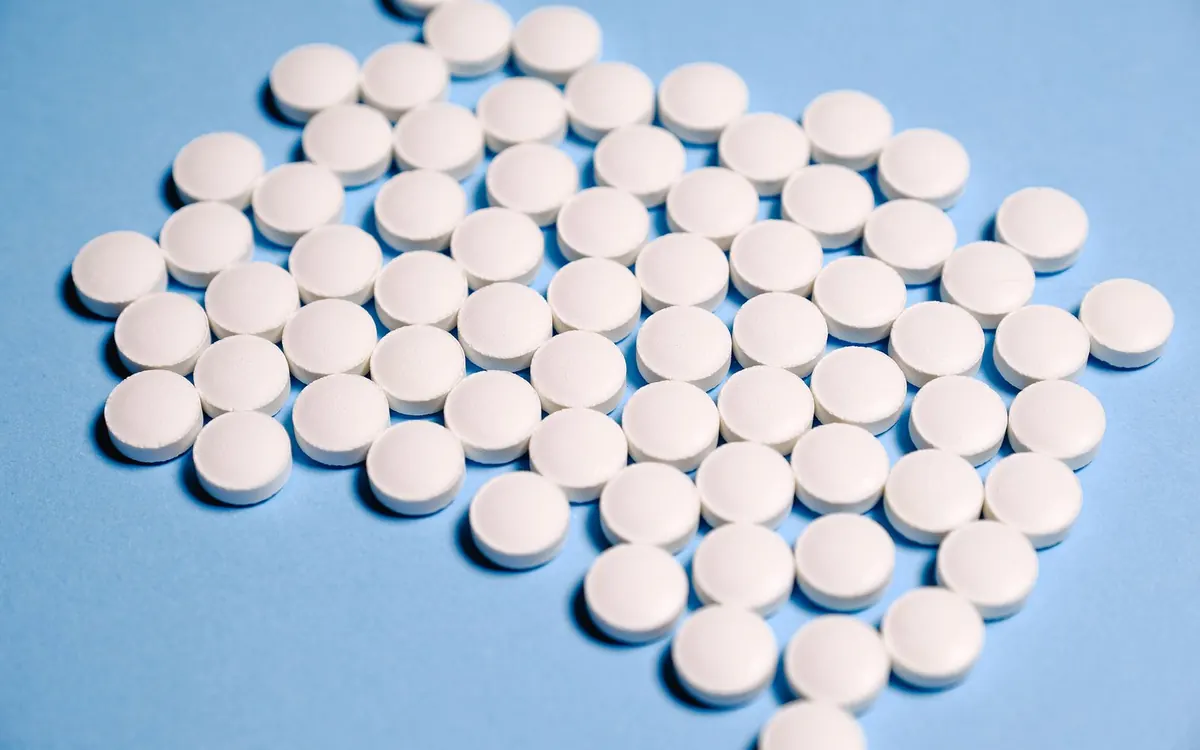
| Round | Small to medium doses | Classic look; easy to coat |
| Oval | Medium to large doses | Easier to swallow than a round tablet of the same weight |
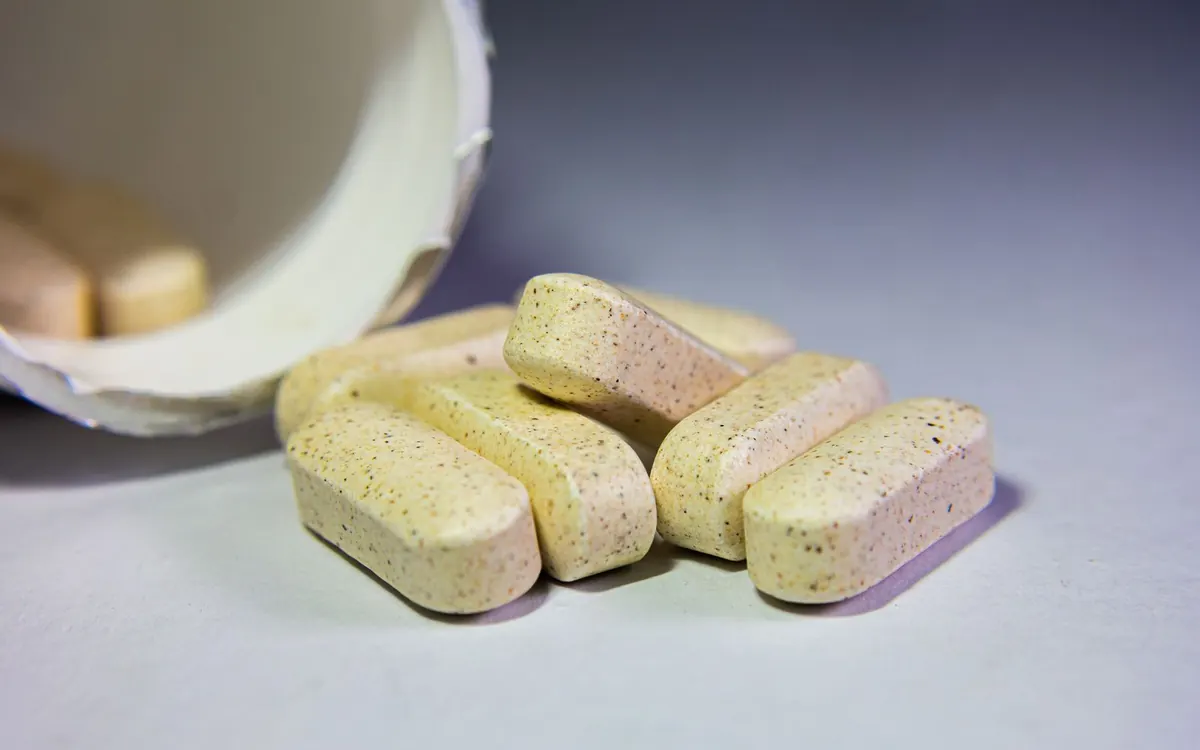
| Caplet (capsule-shaped) | Large doses, multivitamins | Long and narrow; usually easiest for large doses |
| Scored | Split dosing | A line lets customers break the tablet in half |
Tablet size is driven by total weight: actives plus excipients. Large tablets are where most swallowing complaints start, so a manufacturer will often suggest an oval or caplet shape, a film coating, or splitting the serving into two smaller tablets.
Custom colors and finishes
Tablets can be colored through the coating to match your brand, and some shapes can carry a debossed mark. Colors and coatings must be listed in the other ingredients on your label. Keep in mind that custom tooling for unusual shapes or embossing can add cost and time, so stock shapes are usually best for a first run.
Formulas that suit tablets
- Multivitamins and multi-mineral products
- Calcium, magnesium and other mineral products at meaningful doses
- Vitamin C and B-complex products
- Dense, high-dose single ingredients
Formulas that can be harder as tablets include very light botanical powders, oily ingredients and blends with many sticky or moisture-loving ingredients. These may need granulation or may suit capsules better.
Common tablet defects and how they are prevented
| Defect | What it looks like | Typical cause |
|---|---|---|
| Capping | Top of the tablet splits off | Trapped air, too much force, dry granules |
| Lamination | Tablet separates in layers | Similar causes to capping |
| Sticking or picking | Powder sticks to punch faces, marks on the tablet | Moisture, too little lubricant |
| Chipping | Edges break off | Soft tablets, worn tooling |
| Weight variation | Tablets differ in weight | Poor flow, uneven die fill |
Most defects are caught by in-process checks and fixed by adjusting the blend, the granulation or the press settings. A manufacturer that records these checks in the batch record can show you how each run stayed in control.
What to ask a tablet contract manufacturer
- Do you compress and coat tablets in house?
- Direct compression or granulation for my formula, and why?
- Which shapes and sizes can you run with stock tooling?
- What are the in-process limits for weight, hardness and disintegration?
- Which finished product tests run on every batch?
- Can you film coat, score and color tablets?
- What is the minimum batch for my formula?
- Do you bottle and label in house?
For a broader interview guide, read how to choose a supplement manufacturer.
Minimums and timelines for tablets
Tablets often need larger batches than capsules to run well, because the press and coater have practical minimum loads and granulation adds steps. Development can also take longer: the blend may need trial compressions to find the right excipients and force. Ask for minimums and an estimated schedule with your quote; see the supplement manufacturing process for what drives timing.
Quality and labeling
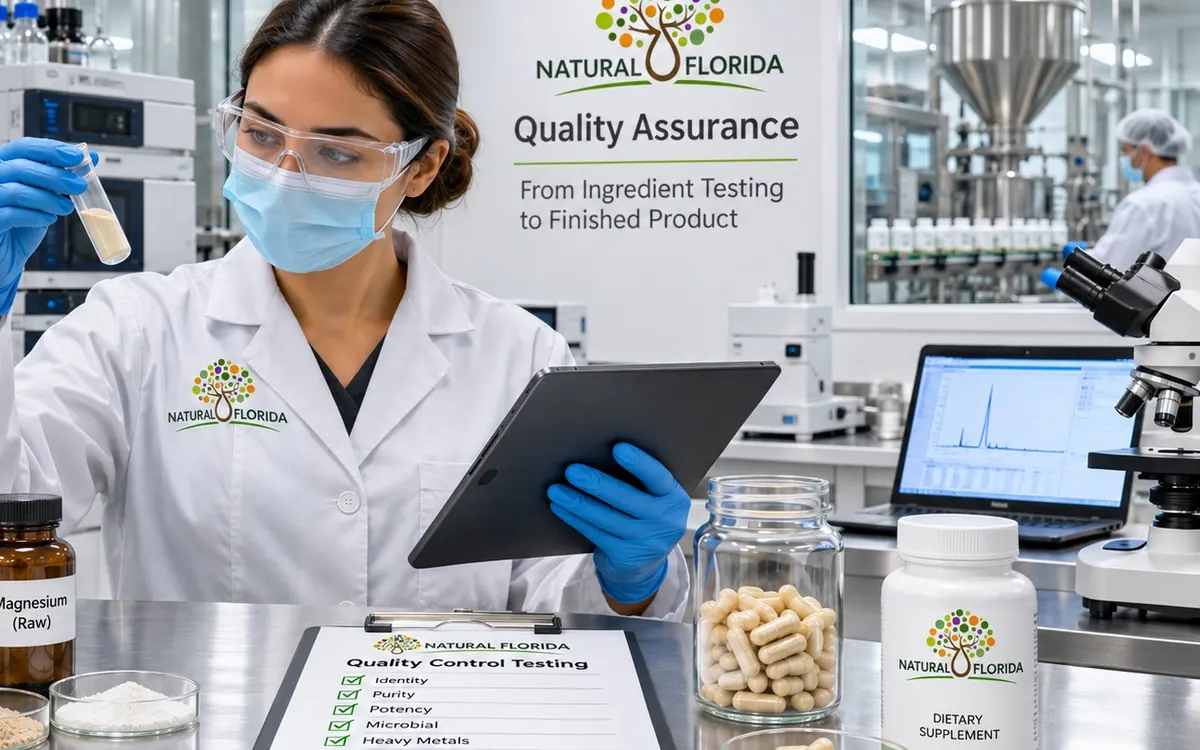
Finished tablets are tested against their specification, typically for identity, strength, contaminants and physical properties, before release. Our guide to supplement testing explains each test, and public standards for supplement tablets, including disintegration, are published by USP. Your label must list the tablet's excipients and coating ingredients in the other ingredients, with a Supplement Facts panel following 21 CFR 101.36.
Tablet manufacturing at Natural Florida
Natural Florida is a supplement tablet manufacturer in Hollywood, Florida, making pressed and coated tablets with consistent weight, hardness and finish under cGMP practices under 21 CFR Part 111. Options include round, oval and caplet shapes, film coating for easy swallowing, scored tablets for split dosing and custom colors to match your brand, with bottling and labeling in house. Weight, hardness, thickness and disintegration are checked during production, and finished batches are tested before release. Private label or your own formula. See our supplement tablet manufacturing service, read about tablet shapes and coatings we offer, or request a quote through the quote form. We reply within one business day.
Frequently asked questions
How are supplement tablets made?
Ingredients are weighed and blended with excipients, sometimes granulated, then compressed in a tablet press. Tablets are checked for weight, hardness, thickness and disintegration, often coated, then bottled, labeled and tested.
What is the most common supplement tablet shape?
Round tablets are common for small doses; oval and caplet shapes are popular for larger doses because they are easier to swallow.
Why do tablets need binders and fillers?
Binders help the powder hold together under compression, fillers bring small doses up to a workable size, and disintegrants help the tablet break apart after swallowing.
Can tablets be made vegan?
Yes, with plant-based or mineral excipients and coatings. Check every excipient and coating ingredient before making a vegan claim.