
The supplement manufacturing process runs in a fixed order: formula and specification, raw material sourcing and identity testing, weighing and blending, encapsulation or tableting, in-process checks, bottling and labeling, finished product testing, and quality release before shipping. Most of the calendar time is spent before the machines start, on sourcing ingredients, sampling and approvals. Production itself is often the shortest part.
Here is how supplements are made, stage by stage, and what each stage means for your launch date.
The stages at a glance
| Stage | What happens | What can slow it down |
|---|---|---|
| 1. Brief and quote | You share the formula or idea, quantity and packaging | Missing details, open questions |
| 2. Formulation | Doses, forms and excipients set, fit in the capsule or tablet checked | New or unusual ingredients |
| 3. Samples | Small samples made for your approval | Several rounds of changes |
| 4. Specification and records | Product specification and master manufacturing record written | Late label or formula changes |
| 5. Sourcing and receiving | Ingredients and packaging ordered, received, quarantined, tested | Backordered ingredients, custom packaging |
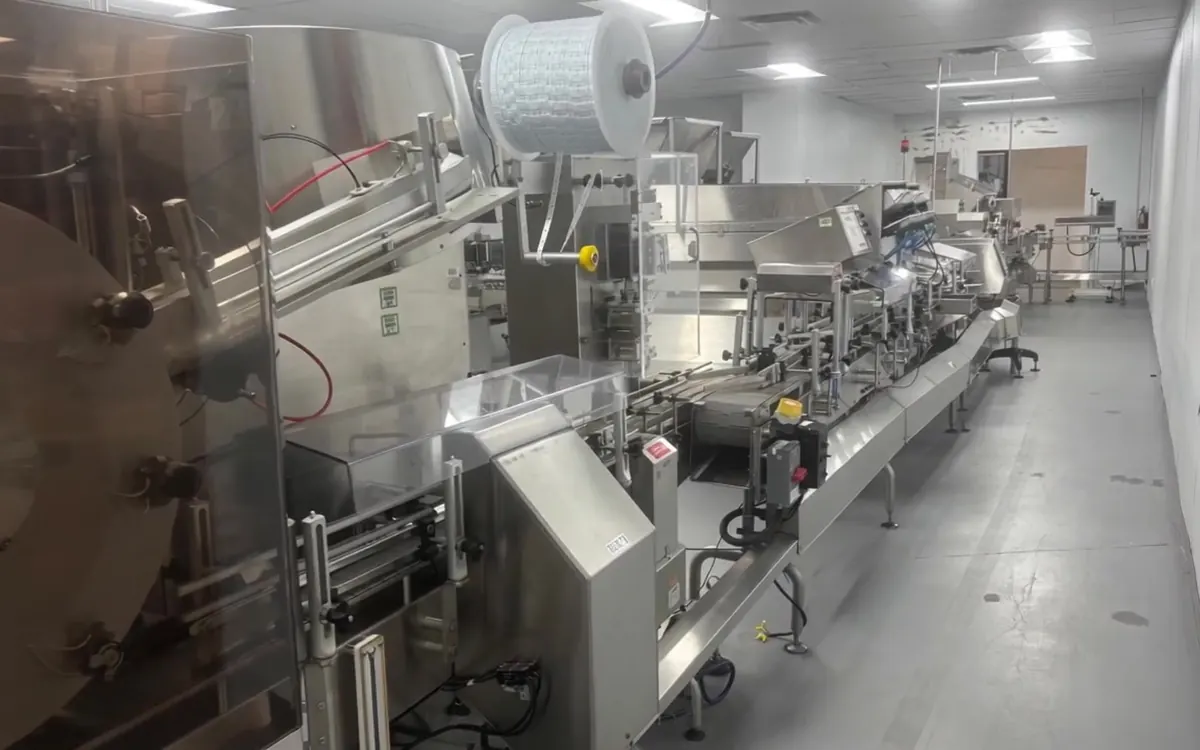
| 6. Production | Weighing, blending, encapsulation or compression, coating | Equipment scheduling |
| 7. Packaging | Bottle filling, capping, sealing, labeling, lot coding | Label printing, packaging delivery |
| 8. Testing and release | Finished product tested against the spec, batch record reviewed | Outside lab turnaround, retests |
| 9. Shipping | Product sent to you, your 3PL or Amazon FBA | Freight booking, FBA appointments |
Before production
Brief, quote and formulation
Supplement production starts on paper. The manufacturer reviews your formula or builds one, checks that the doses fit in a practical number of capsules or tablets, and chooses excipients such as flow agents or binders where needed. If you do not have a formula yet, see our guide to custom supplement formulation.
Samples and approval
Samples let you check appearance, smell, taste, size and count before the full run. Approving samples is the moment to lock the formula; changes after this point usually push the schedule back.
Specification and master manufacturing record
Under the FDA cGMP rule, 21 CFR Part 111, the manufacturer must set specifications for the product and prepare a master manufacturing record (MMR) for each formula and batch size. The MMR is the recipe and instruction set every batch must follow: ingredients and amounts, equipment, steps, in-process controls and packaging. Each batch then gets its own batch production record showing what was actually done.
Sourcing and receiving
Ingredients and packaging are ordered, then held in quarantine when they arrive. Each dietary ingredient is checked for identity before it can be used, and other components are checked against their specifications. Only released materials move to production. This is often the longest stage, especially for botanical extracts, branded ingredients or custom bottles.
Production
Weighing and blending
Operators weigh each ingredient against the batch record, with a second person or system verifying the weights. Ingredients are then blended to an even mix. Blend uniformity matters: every capsule or tablet should carry the same amount of each ingredient.
Encapsulation or compression
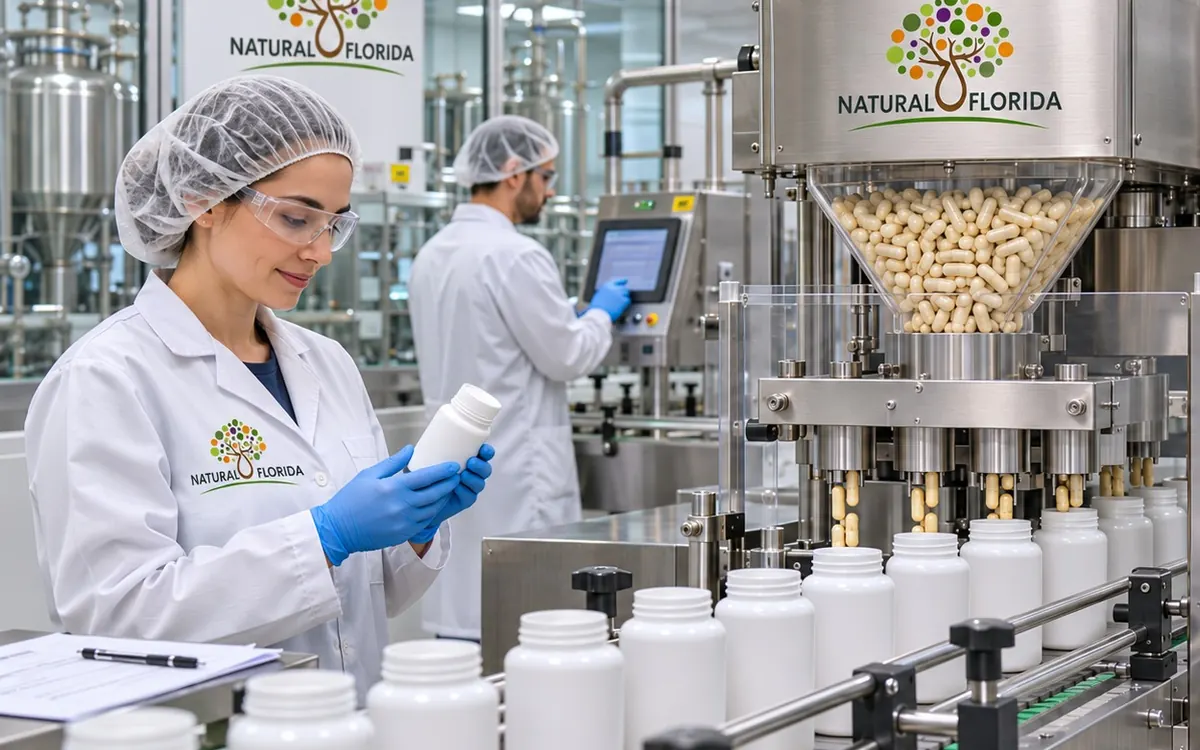
For capsules, the blend is filled into empty shells on an encapsulation machine, and fill weights are checked through the run. Our guide on how supplement capsules are made covers this step. For tablets, the blend (sometimes granulated first) is compressed on a tablet press, with checks on weight, hardness and thickness; see supplement tablet manufacturing.
Coating and polishing
Tablets may receive a film coating for easier swallowing, appearance or moisture protection. Capsules may be polished to remove powder from the outside of the shells.
Packaging and labeling
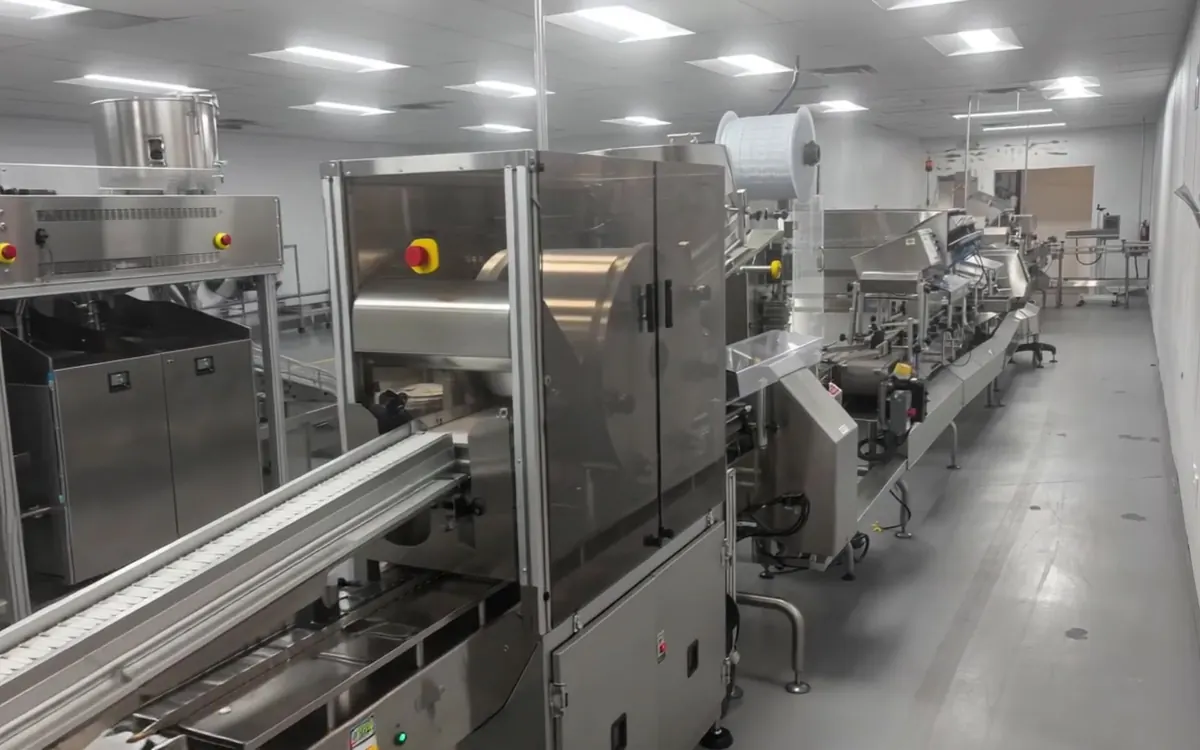
Bottles are filled to the target count, then a desiccant and sometimes cotton are added, caps applied and induction seals heat-sealed. Labels go on with the lot number and best-by date printed or applied. Shrink bands or sleeves are added if specified. Packaging and labeling are part of cGMP too: label versions must be controlled so the right label goes on the right product.
Testing and quality release
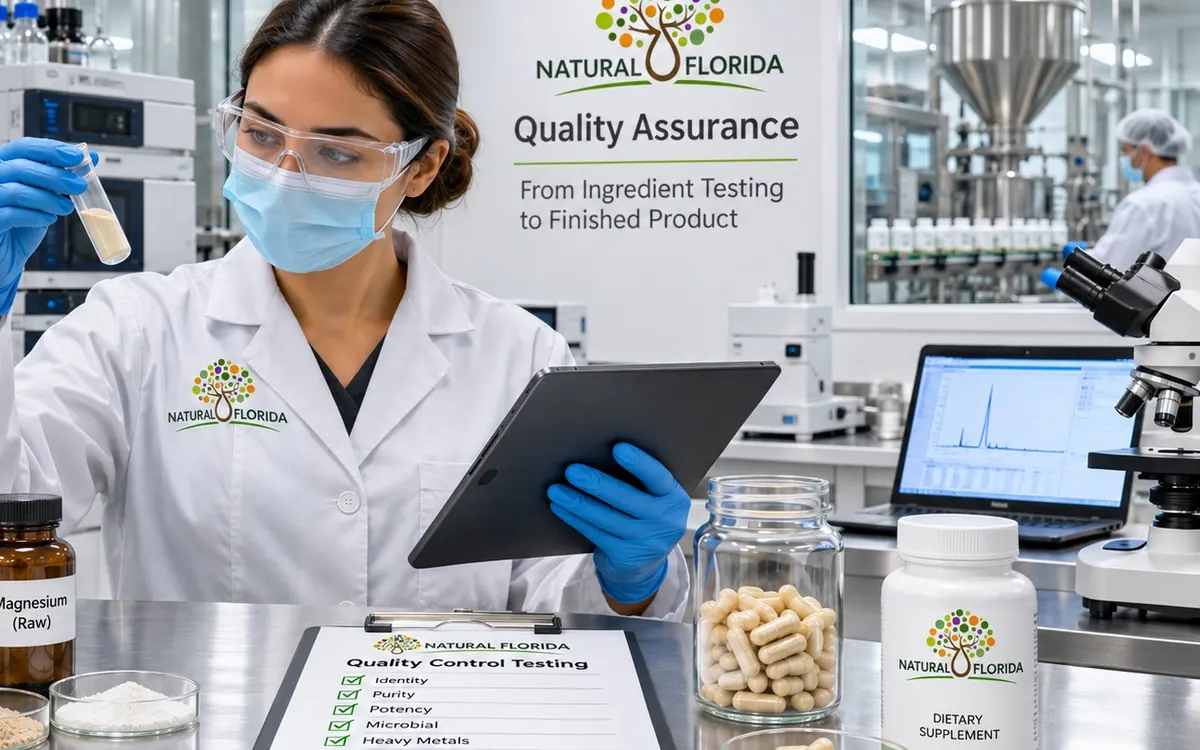
Finished product is tested against the specification. Typical tests include identity, strength of key ingredients, microbial limits and heavy metals, depending on the product. The quality unit then reviews the batch record and test results and releases the batch only if everything meets specification. Learn more in our guide to supplement testing.
Typical timelines
Timelines vary widely across the industry, so treat these as general ranges, not a promise:
| Project | Typical range across the industry |
|---|---|
| Reorder of an existing product, ingredients in stock | A few weeks |
| Private label product, standard packaging | Several weeks |
| Custom formula with new ingredients or packaging | Two to several months, including sampling |
What usually decides the date is not the machine time but ingredient lead times, sampling rounds, label approval and packaging deliveries. Ask your manufacturer for a schedule with your quote, and ask which items are on the critical path.
How to speed up your launch
- Send a complete brief: formula, doses, format, count, packaging, quantity
- Choose stock bottles and caps for the first run
- Approve samples quickly and in writing
- Finalize label artwork early; use the FDA Dietary Supplement Labeling Guide to check it
- Avoid formula changes after approval
- Book Amazon FBA or 3PL receiving in advance
- Plan your reorder before the first run sells out
What you receive at the end
When the batch is released, you should know exactly what you are getting. Typical deliverables include:
- Finished, labeled bottles with lot numbers and best-by dates
- A certificate of analysis for the lot, or test results on request
- Packing list with carton counts and weights
- Shipping details for your warehouse, 3PL or Amazon FBA
Agree on these before production starts. If you sell on Amazon or to retailers, ask for the documents they will need in advance, so nothing waits on paperwork once the product is ready. Our guide on how to read a certificate of analysis explains what to check on the COA.
Reorders are faster
Once a product has been made, the specification, master manufacturing record, label and supplier list already exist. A reorder skips formulation, sampling and most approvals, so it is usually much quicker than the first run, provided the ingredients and packaging are available. That is why it pays to plan reorders early and share your sales forecast with your manufacturer.
Your role as the brand owner
The FDA expects the company whose name is on the label to make sure its product is made under cGMP, even when a contract manufacturer does the work. Keep copies of your specification, COAs and key correspondence, and know who makes each part of your product. The FDA's information for industry page links to the main rules.
How we run production at Natural Florida
Natural Florida handles the supplement manufacturing process for capsules and tablets in house, from formulation and samples to blending, encapsulation or compression, bottling, labeling and testing, following cGMP practices under 21 CFR Part 111. If you already have a formula, our contract manufacturing service produces it to your specification with documentation for every batch. We give you a realistic timeline with your quote, before you commit. Read about supplement contract manufacturing at Natural Florida or send your brief through the quote form.
Frequently asked questions
How long does supplement manufacturing take?
It depends mainly on ingredient availability, sampling and packaging. Reorders with ingredients in stock are fastest; custom formulas with new ingredients take longest. Ask your manufacturer for a schedule with your quote.
What is a master manufacturing record?
It is the written recipe and set of instructions for making a specific product and batch size, required by 21 CFR Part 111. Every batch follows it, and a batch production record documents what was actually done.
Why are ingredients quarantined when they arrive?
So they cannot be used until they are checked. Each dietary ingredient must pass an identity check and other components must meet their specifications before release to production.
Can I change my formula after samples are approved?
You can, but it usually means new samples, an updated specification and records, and possibly a new label, which delays the first run. Make changes before you approve samples.