

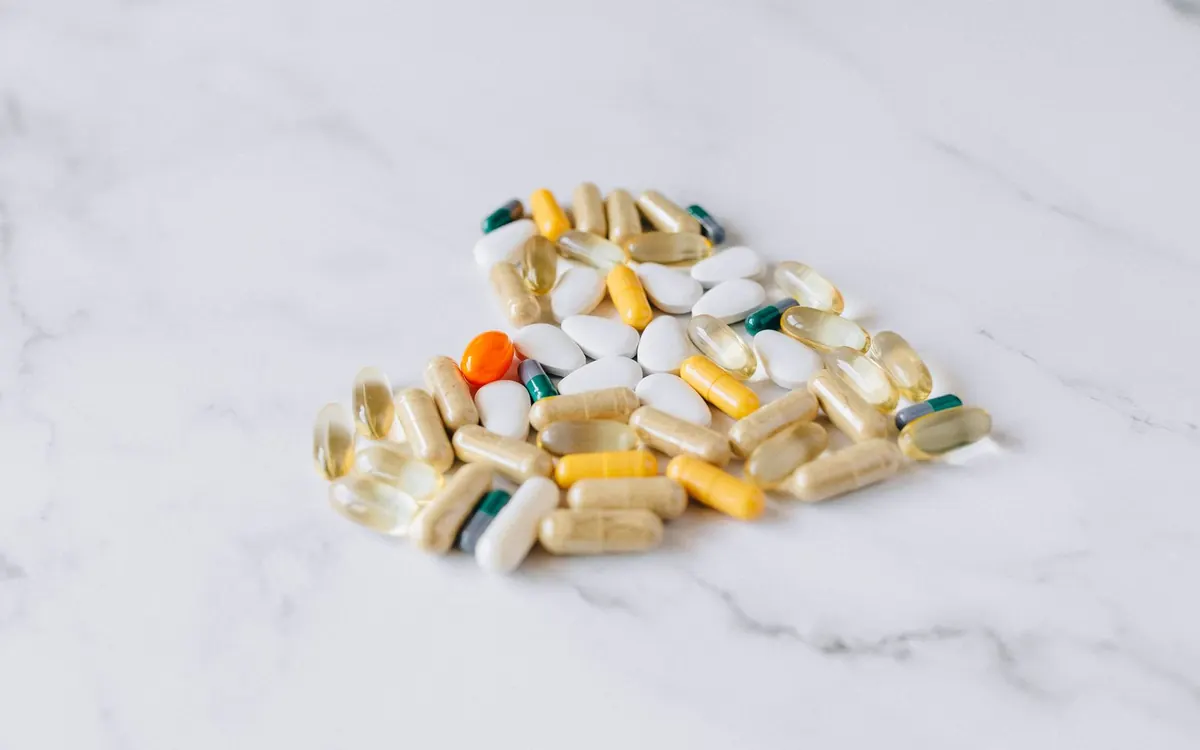
This glossary explains the supplement manufacturing terms you will meet when you talk to a manufacturer, read a quote or review quality documents, in plain English. It covers more than 60 terms, from formulation and capsule and tablet production to testing, labeling, packaging and regulation, and links to our longer guides where a term needs more space. Use the letters to jump to a term, or search the page with your browser.
Jump to a letter
A
- Active ingredient
- In supplements, usually called a dietary ingredient: the vitamin, mineral, botanical, amino acid or other substance the product is taken for, listed in the Supplement Facts panel with its amount.
- Adverse event report
- A report of a health problem a consumer experienced after using a product. Supplement companies must report serious adverse events to the FDA and keep records, and the label must give a US address or phone number for reports.
- Allergen declaration
- The statement on the label of any major food allergen in the product, such as milk, soy or tree nuts, either in the ingredient list or in a "Contains" statement.
- Amazon FBA
- Fulfillment by Amazon, where a seller ships inventory to Amazon warehouses and Amazon stores, packs and delivers orders. Supplement sellers must meet Amazon's prep, labeling and supplement policies. See selling supplements on Amazon.
- Assay
- A laboratory test that measures how much of an ingredient is present, used to confirm potency against the specification.
B
- Batch
- A specific quantity of product made in one production cycle, intended to have uniform character and quality, and identified by a lot number.
- Batch production record
- The record completed for each batch showing every step, material, quantity, check and signature, proving the batch was made according to the master manufacturing record. Required under 21 CFR Part 111.
- Best-by date
- A date on the package showing how long the product is expected to meet its label claims when stored as directed, supported by stability information.
- Binder
- An excipient that helps tablet ingredients stick together under compression so the tablet holds its shape.
- Blister pack
- Packaging in which each capsule or tablet sits in its own sealed cavity, backed by foil or film.
- Botanical
- An ingredient from a plant, such as a root, leaf or seed, often as a powder or extract. The label must name the plant part used.
C
- Capsule
- A two-piece shell, usually vegetable (HPMC) or gelatin, filled with powder or granules. See how supplement capsules are made.
- Capsule size
- The standard size code of a capsule shell, from the large 000 to the small 3 and beyond. See the capsule size chart.
- Certificate of analysis (COA)
- A document listing the tests performed on a lot, the specification for each and the results. See how to read a certificate of analysis.
- cGMP
- Current Good Manufacturing Practice: the FDA rules for making, packaging, labeling and holding dietary supplements, in 21 CFR Part 111. See what cGMP means for dietary supplements.
- Child-resistant cap
- A closure that needs a push-and-turn or similar action, designed to be hard for young children to open. Required for some products, such as many iron supplements.
- Coating
- A thin layer applied to tablets to make them easier to swallow, mask taste, protect ingredients or control where they release. See tablet coatings explained.
- Compression
- The step in tablet manufacturing where a press squeezes blended powder or granules into tablets between punches and a die.
- Contract manufacturer
- A company that makes products for other brands under the brand's name. See supplement contract manufacturing explained.
- Custom formulation
- Developing a new formula for a brand, choosing ingredients, doses and format, rather than using an existing stock formula. See custom supplement formulation.
D
- Daily Value (DV)
- A reference amount of a nutrient used to calculate the % Daily Value shown in the Supplement Facts panel.
- Desiccant
- A packet or canister, often silica gel, placed in a bottle to absorb moisture and protect the product.
- Dietary ingredient
- A vitamin, mineral, herb or other botanical, amino acid, dietary substance, or a concentrate, metabolite, extract or combination of these, as defined in the law.
- Dietary supplement
- A product taken by mouth that contains a dietary ingredient intended to supplement the diet, labeled as a dietary supplement. The FDA's dietary supplements overview explains how they are regulated.
- Disintegrant
- An excipient that helps a tablet break apart after swallowing.
- Disintegration
- How quickly a tablet or capsule breaks apart in fluid, tested to show the product can release its ingredients.
- DSHEA
- The Dietary Supplement Health and Education Act of 1994, the law that defines dietary supplements and sets the framework for how they are regulated in the US.
E
- Encapsulation
- Filling capsule shells with powder or granules, by machine for production runs.
- Enteric coating
- A coating designed to resist stomach acid and release the contents further along the digestive tract.
- Excipient
- Any ingredient other than the dietary ingredients, such as fillers, binders, flow agents, disintegrants and coatings, that helps make the product. Listed under "Other ingredients".
- Expiration date
- A date after which the product should not be used. Many supplements use a best-by date instead.
- Extract
- A concentrated form of a botanical made by drawing out compounds with a solvent such as water or ethanol, often described by a ratio or a standardized marker.
F
- Fill weight
- The weight of powder in each capsule, checked during production to make sure each capsule contains the right amount.
- Filler
- An excipient that adds bulk so a small dose can be made into a capsule or tablet of practical size.
- Film coating
- A thin polymer coating on tablets that smooths the surface, adds color and makes swallowing easier.
- Flow agent
- An excipient that helps powder move smoothly through machines, improving weight uniformity.
- Formula
- The list of ingredients and amounts per serving that defines a product. With a custom formula, the brand normally owns it.
G
- Gelatin capsule
- A capsule shell made from animal-derived gelatin. See vegetarian vs gelatin capsules.
- Granulation
- Turning fine powder into larger granules, wet or dry, so it flows and compresses better.
H
- Hardness
- The force needed to break a tablet, tested so tablets survive packaging and shipping but still break down after swallowing.
- HDPE
- High-density polyethylene, the white, opaque plastic used for most supplement bottles. See the supplement packaging guide.
- Heavy metals
- Contaminants such as lead, arsenic, cadmium and mercury, tested in ingredients or finished products against limits.
- HPMC
- Hydroxypropyl methylcellulose, the plant-derived material used for vegetarian capsules, also called hypromellose.
I
- Identity testing
- Testing that confirms an incoming ingredient is what it claims to be. Required for each dietary ingredient under 21 CFR Part 111.
- In-process check
- A test or measurement taken during production, such as capsule fill weight or tablet hardness, to keep the batch within specification.
- Induction seal
- A foil seal bonded to the bottle rim under the cap, providing tamper evidence and moisture protection.
L
- Label claim
- The amount of each dietary ingredient declared on the label, which the product must meet throughout its shelf life.
- Lot number
- A code that identifies a batch and links each package to its batch record, used for traceability and recalls.
M
- Master manufacturing record (MMR)
- The master document for a product, describing ingredients, amounts, equipment, steps, specifications and controls, used to make every batch the same way.
- Microbial testing
- Testing for microorganisms such as total plate count, yeast and mold, and specific pathogens.
- MOQ
- Minimum order quantity: the smallest run a manufacturer will produce for a product. See low MOQ supplement manufacturing.
N
- NDI notification
- A notification to the FDA required before marketing a supplement with a new dietary ingredient not sold in the US before October 15, 1994. See the FDA's new dietary ingredient page.
- Nutraceutical
- An informal industry term for products with nutritional or health-related value, including dietary supplements. See nutraceutical contract manufacturing.
O
- Other ingredients
- The label list of everything that is not a dietary ingredient, such as the capsule shell, fillers and flow agents, in descending order by weight.
- Overage
- A small extra amount of an ingredient added at manufacture so the product still meets its label claim at the end of shelf life.
P
- PET
- Polyethylene terephthalate, a clear or amber plastic used for bottles that show the product.
- Potency
- The amount of an active ingredient present, tested by assay against the label claim.
- Private label
- Selling a manufacturer's existing formula under your own brand and label. See private label supplements: the complete guide.
- Proprietary blend
- A named group of ingredients listed with the total weight of the blend, with ingredients in descending order by weight.
Q
- Quarantine
- Holding incoming materials or finished batches apart until quality control releases them.
R
- Release
- The quality decision that a material or finished batch meets its specifications and can be used or shipped.
- Retained sample
- A reserve sample of each batch kept for testing if questions arise later.
S
- Shelf life
- How long a product keeps its quality and label claims under stated storage conditions.
- Shrink sleeve
- A printed plastic film shrunk around a bottle with heat for full-coverage graphics and, with a neck band, tamper evidence.
- Specification
- The set of limits a material or product must meet, such as identity, potency, purity and physical properties. Required under 21 CFR Part 111.
- Stability testing
- Testing a product over time under set conditions to support its best-by date.
- Stock formula
- A ready-made formula offered by a manufacturer for private or white label use.
- Structure/function claim
- A label statement about how an ingredient affects the normal structure or function of the body, which requires the FDA disclaimer. See structure/function claims.
- Supplement Facts panel
- The required box on a supplement label showing serving size, dietary ingredients, amounts and % Daily Value, under 21 CFR 101.36. See how to design a Supplement Facts panel.
T
- Tablet
- A solid dose made by compressing powder or granules. See supplement tablet manufacturing.
- Tamper-evident
- Packaging with a feature, such as an induction seal or neck band, that shows whether it has been opened.
- Third-party testing
- Testing by an independent laboratory, used to confirm results or meet retailer requirements. See supplement testing.
- Turnkey manufacturing
- A service where the manufacturer handles everything from formula and sourcing to packaging. See turnkey vs contract manufacturing.
U
- USP
- United States Pharmacopeia, an independent organization that publishes quality standards and test methods for ingredients and supplements. See USP.
W
- Weight variation
- How much individual capsules or tablets differ in weight from the target, checked to make sure each dose is consistent.
- White label
- A ready-made product, often already made, that many brands can buy and sell under their own labels. See white label supplements.
How to use these terms with your manufacturer
Knowing the vocabulary helps you read a quote, compare offers and ask sharper questions. When you request a quote, the most useful information to share is your formula or product idea, the format (capsules or tablets), the serving size and count, the packaging you want and your target quantity. If you are moving from another manufacturer, send your current specification and Supplement Facts panel so the new quote can be like for like. New to all of this? Start with how to start a supplement brand.
The documents behind the terms
Three documents tie many of these terms together:
| Document | What it contains | Who uses it |
|---|---|---|
| Specification | The limits for identity, potency, purity and physical tests | Quality control, to release batches |
| Master manufacturing record | How the product is made, step by step | Production, for every batch |
| Certificate of analysis | Test results for a specific lot | You, retailers and marketplaces |
The official sources are the FDA's cGMP guidance for dietary supplements, the eCFR text of 21 CFR Part 111 and the FDA's Dietary Supplement Labeling Guide. Advertising claims are covered by the FTC Health Products Compliance Guidance.
Natural Florida: custom capsules and tablets
Natural Florida is a supplement manufacturer in Hollywood, Florida, making custom capsules and tablets for brands of all sizes under cGMP practices under 21 CFR Part 111. We test the identity of incoming ingredients, keep master manufacturing records and batch records, test finished batches before release and send documentation with every order. Visit the Natural Florida home page for an overview, see our capsule and tablet manufacturing services, or tell us about your product through the quote form. We reply within one business day.
Frequently asked questions
What is the difference between an MMR and a batch record?
The master manufacturing record is the master recipe and instructions for a product. The batch production record documents how one specific batch was actually made, following the MMR.
What does cGMP stand for?
Current Good Manufacturing Practice. For dietary supplements, the FDA rules are in 21 CFR Part 111.
What is an excipient in a supplement?
Any ingredient other than the dietary ingredients, such as fillers, binders, flow agents and coatings, that helps make the capsule or tablet. Excipients are listed under "Other ingredients".
What is the difference between private label and white label?
Private label usually means a manufacturer's formula made and labeled for your brand, while white label usually means a ready-made product many brands can buy and relabel. Custom formulation means a formula developed for you.